
Criminal Trial Circumstantial evidence Defective investigation The witness to have signed documents which were blank, purportedly used by the police to strengthen this case No direct evidence is available-The Law Literates
 SUPREME COURT OF INDIA
 MAGHAVENDRA vs STATE OF CHHATTISGARH CRLA 915/16 24/04/23
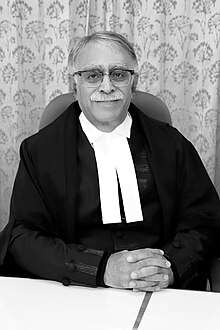
JUSTICE SANJAY KAROL (SC)
Criminal Trial Circumstantial evidence Defective investigation The witness to have signed documents which were blank, purportedly used by the police to strengthen this case No direct evidence is available which firmly proves the ballistic report, i.e., the expert’s report Neither the expert who analysed and conducted the chemical analysis nor the author of the report stand examined Before arresting the accused, no information was ever supplied to the family members of any of the accused persons The record does not reflect that the house from which there coveries were affected belonged to accused The Investigating Officer’s testimony to be inspiring in confidence The 1.0. did not enter his movement in the case diary He does not associate any of the residents of the area for conducting the search Most importantly he admits that both the memo of arrest as also the recovery not to have been prepared by him or bearing his signature and the same too,
will be helpful to refer to the general principle of cases
revolving around circumstantial evidence as encapsulated by Vijay Shankar v. State of Haryana (2015) 12 SCC 644. The relevant
portion is as follows:
“8. There is no eyewitness to the occurrence and the
entire case is based upon circumstantial evidence. The normal principle is that in a case based on circumstantial evidence the circumstances from which an inference of guilt is sought to be drawn must be cogently and firmly established; that these circumstances should be of a definite tendency unerringly pointing towards the guilt of the accused; that the circumstances taken cumulatively should form a chain so complete that there is no escape from the conclusion that within all human probability the crime was committed by the accused and they should be incapable of explanation of any hypothesis other than that of the guilt of the accused and inconsistent with their innocence vide Sharad Birdhichand Sarda v. State of Maharashtra [Sharad Birdhichand Sarda v. State of Maharashtra, (1984) 4 SCC 116 : 1984 SCC (Cri) 487]. The same view was reiterated in Bablu v. State of Rajasthan [Bablu v. State of Rajasthan, (2006) 13 SCC 116 : (2007) 2 SCC (Cri) 590].”
13. In light of the fact that all the coaccused who had preferred appeals stand acquitted by the Court below, therefore, while fully appreciating the testimony of this witness, this Court confines the
8
discussions only concerning the present appellant, namely Pankaj Singh.
14. Interestingly, neither of the independent witness (PW 6 and PW 7) supported the prosecution case. Despite extensive cross examination conducted by the Public Prosecutor, nothing substantial could be elicited from their testimonies indicating any guilt of the accused. Noticeably, both the witnesses are rustic villagers working as daily wagers, have deposed to have signed blank papers, and are not residents of the area.
15. A perusal of the testimony of PW6 unrefutably reveals the witness to have signed documents which were blank, purportedly used by the police to strengthen this case for the commission of the offence.
Conclusion
45. In the considered opinion of the Court, the High Court, without appreciating the testimonies of the witnesses mentioned above in their true import and meaning, and without having any discussion concerning the complicity of the accused, in a perfunctory manner held the prosecution to have established the case, which is entirely circumstantial in nature, against the present appellant. Significantly, the High Court holds that the evidence reveals that “in all human probability the act must have been done by the accused”. Inter alia, it
Dated : 24th April, 2023; Place : New Delhi.
22
is this finding which we find to be erroneous, for the principle of determining the guilt of the accused in a case involving circumstantial evidence is not that of probability but certainty and that all the evidence present should conclusively point towards only a singular hypothesis, which is the guilt of the accused, Pankaj Singh.
46. Given the above, the Judgment dated 14.1.2016 passed by the High Court of Chhattisgarh at Bilaspur in Criminal Appeal No.468 of 2013 titled Maghavendra Pratap Singh @ Pankaj Singh v. State of Chhattisgarh is set aside and the appeal is allowed.
have many corrections and overwriting, thus reducing the correctness and authenticity of this document Order of conviction passed by High Court is set aside Appeal is allowed.
For more read the Judgment, click here
Pankaj singh vs state of CHATTISGARH Judgement_24-Apr-2023 VAIBHAV TOMAR
Adv Vaibhav Tomar (All Rights Reserved )