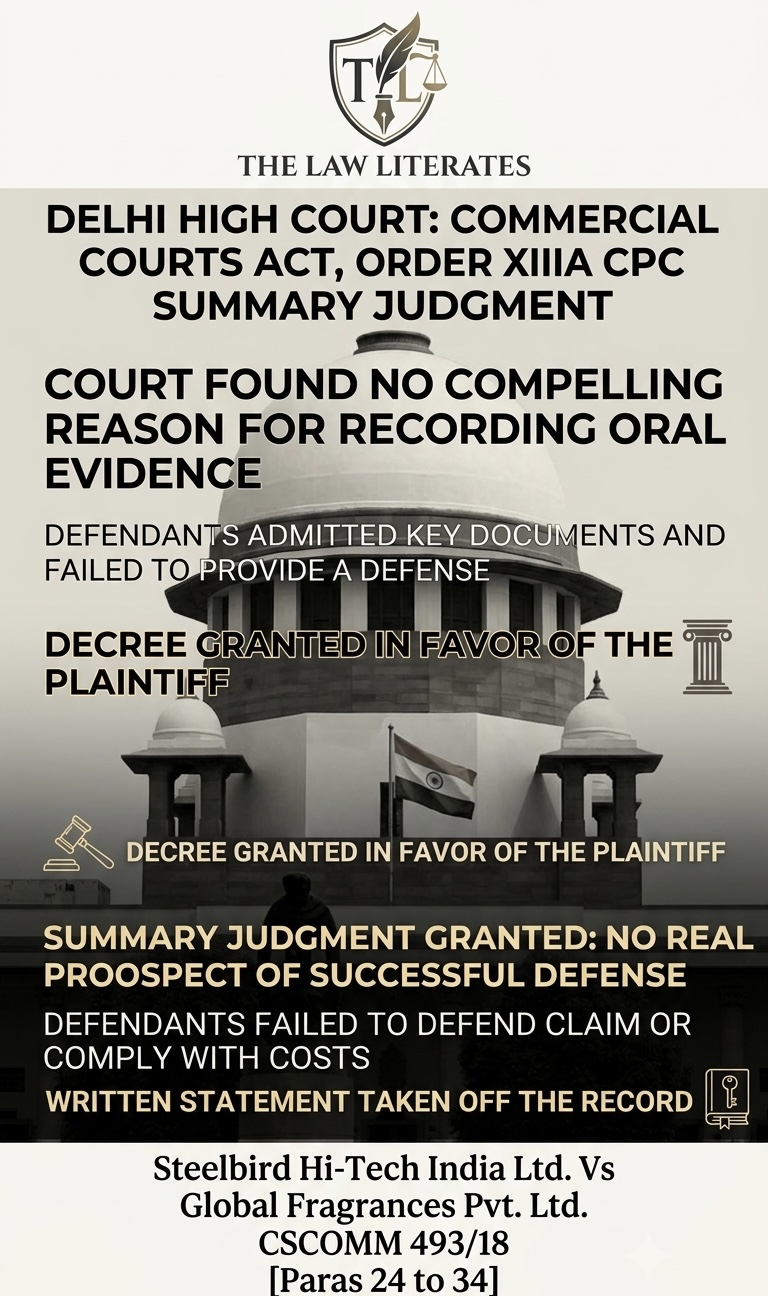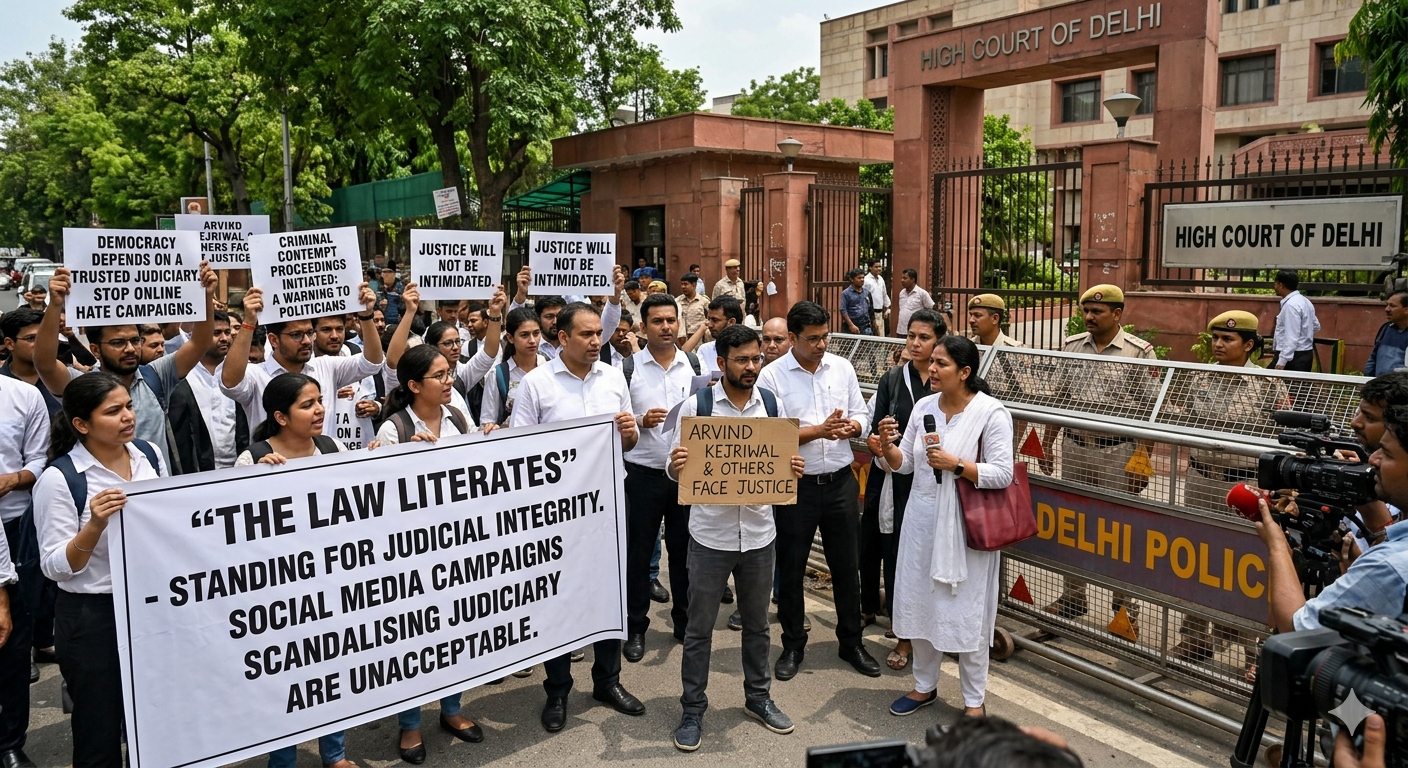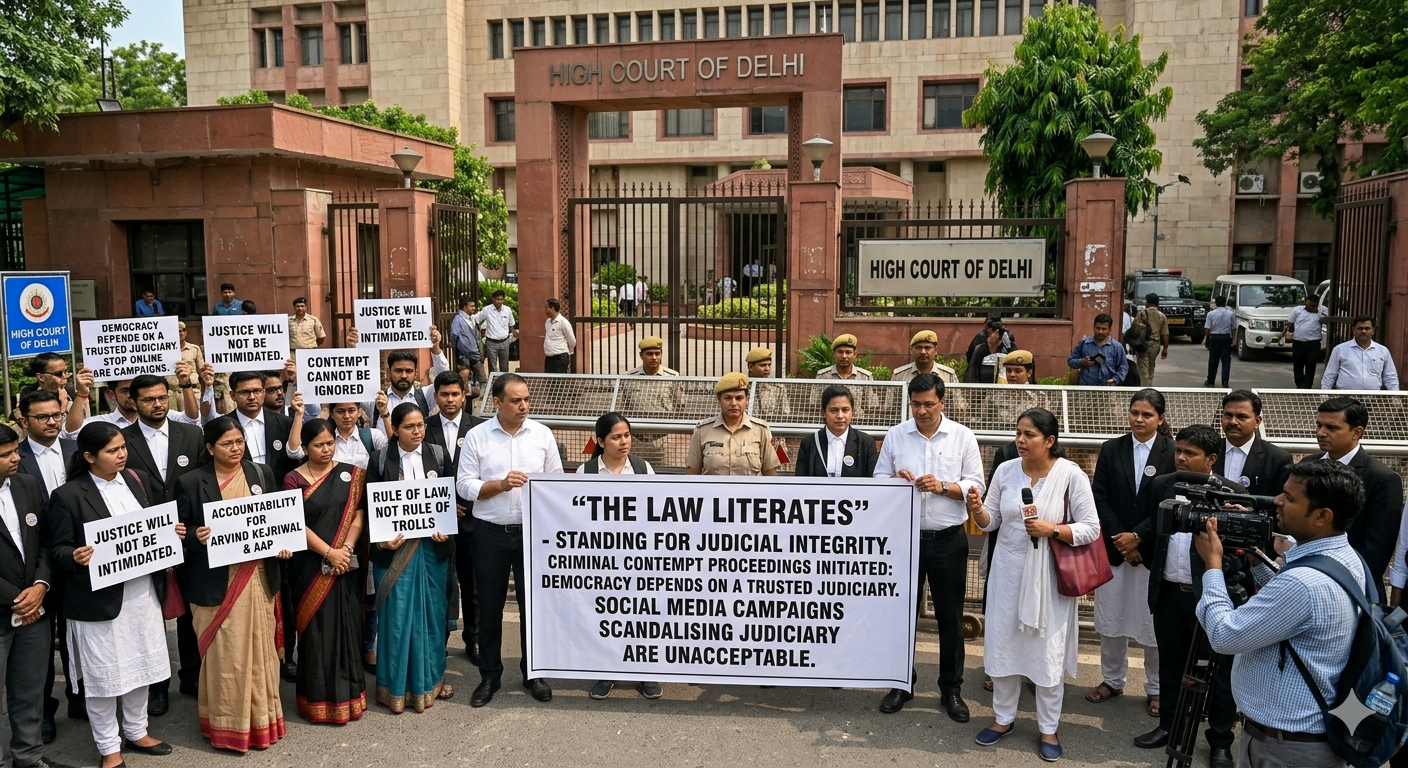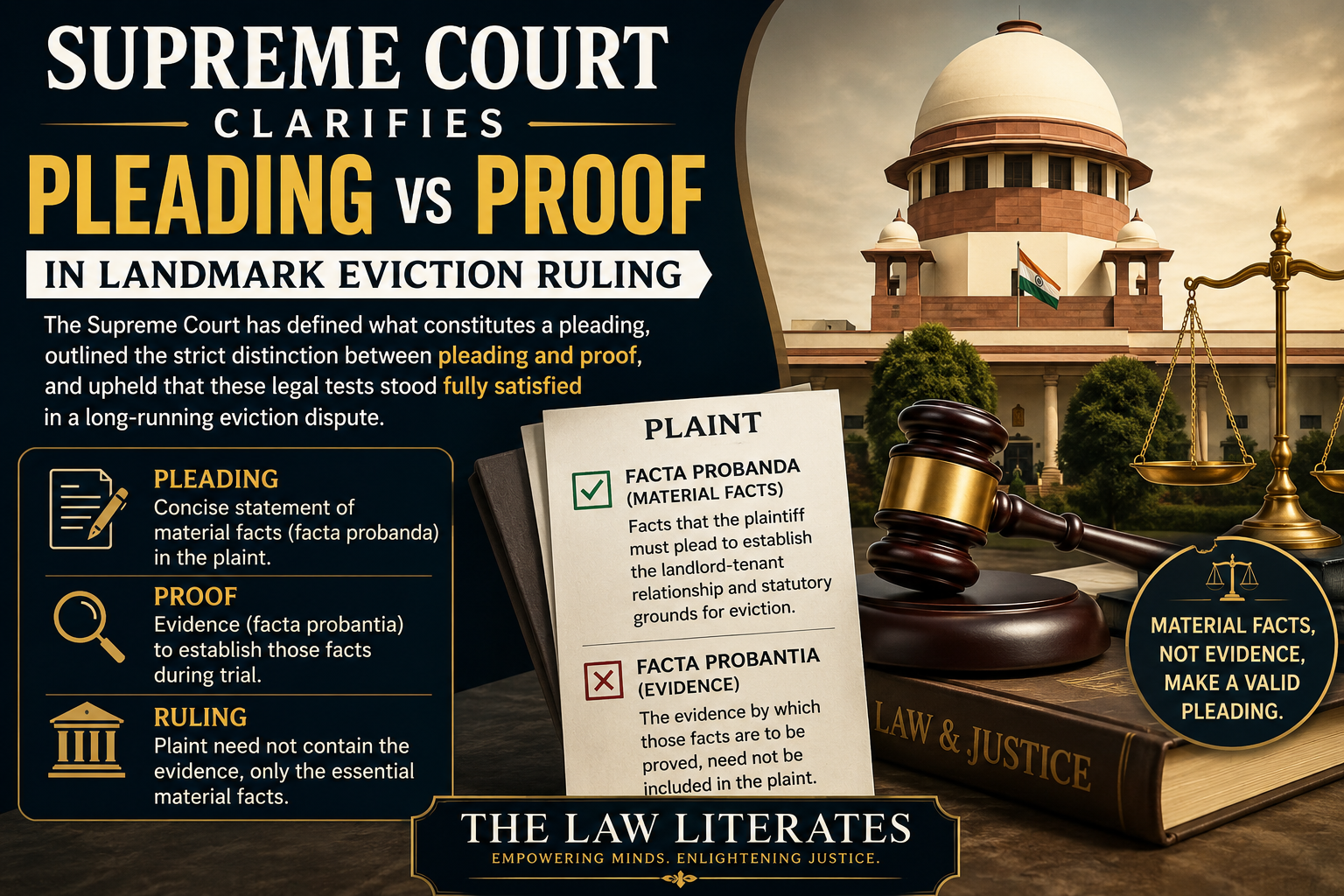
Tragedy in the Judiciary: Delhi Mourns the Loss of 30-Year-Old Judge
The legal community in Delhi is in a state of shock following the tragic news of the death of Aman Kumar Sharma, a 30-year-old judge. On Saturday, May 2, 2026, Sharma was found dead at his residence in Delhi, sending ripples of grief through the halls of justice.
While investigations are still in the early stages, preliminary reports suggest that authorities suspect the cause of death to be suicide.
The Details of the Incident
According to police statements, the incident came to light in the afternoon. When Sharma did not respond to calls or visitors, the discovery was made at his home.
• Status of Investigation: Police have arrived at the scene to conduct a forensic sweep.
• Official Statements: While no suicide note has been publicly confirmed yet, the “preliminary information” points toward self-harm.
• Next Steps: A post-mortem examination is expected to be conducted to provide a definitive cause of death.
A Career Cut Short
At just 30 years old, Aman Kumar Sharma was part of the younger generation of the Indian judiciary—a role that carries immense responsibility and, often, significant pressure. The loss of such a young legal mind is not just a personal tragedy for his family, but a loss for the judicial system itself.
The Weight Behind the Robes
This heartbreaking event has reignited conversations regarding the mental health and high-stress environments faced by judicial officers. Judges often deal with:
• Overwhelming case backlogs.
• High-stakes decision-making.
• Social isolation due to the nature of their neutral office.
all rights Reserves Vaibhav Tomar (Adv)
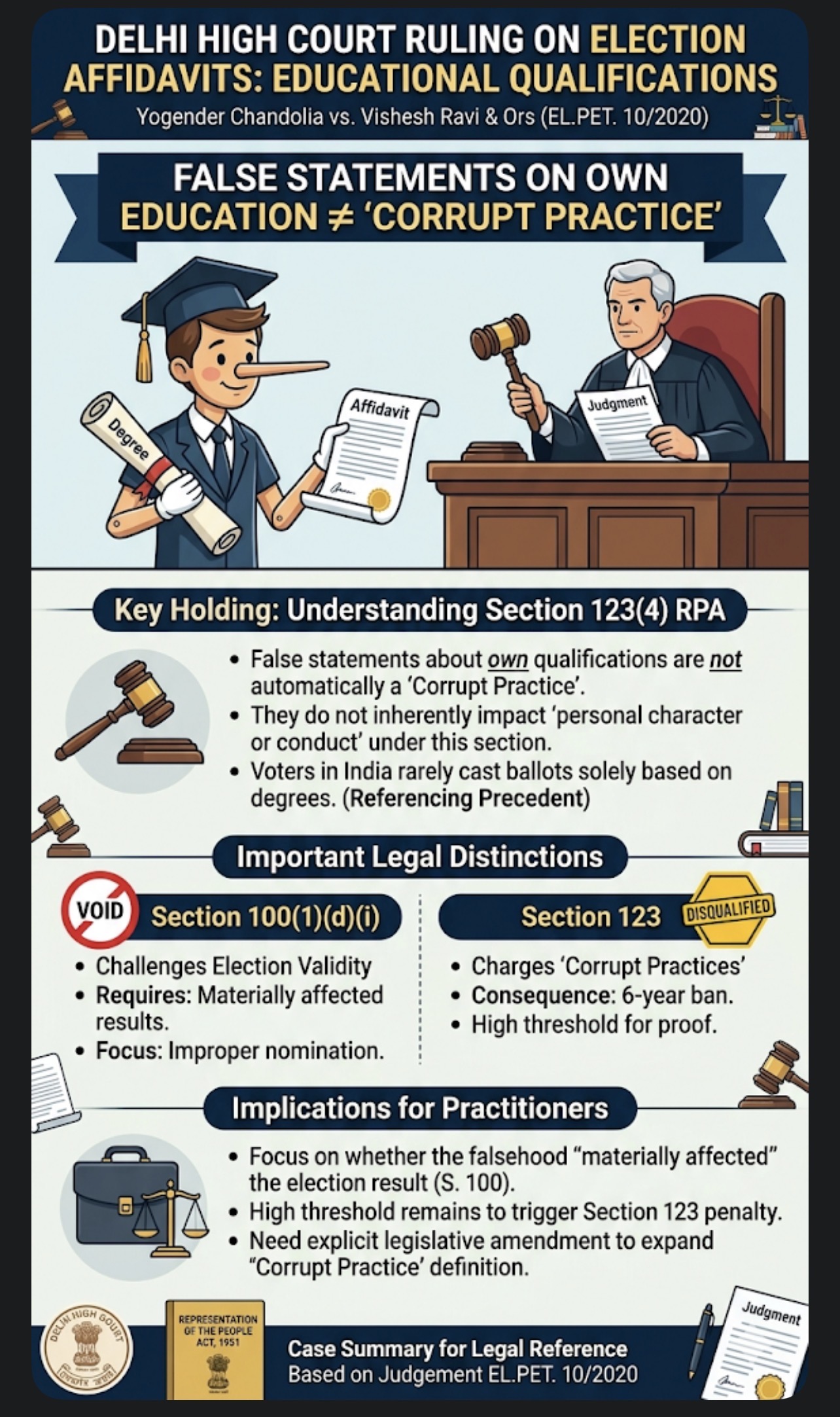
Delhi High Court has held that false statements made by a candidate about their own educational qualifications in election affidavits do not amount to “corrupt practice” under Section 123(4) of the Representation of the People Act, 1951

The Delhi High Court, in the case of Yogender Chandolia vs. Vishesh Ravi & Ors (EL.PET. 10/2020), has delivered a significant judgment regarding the scope of “corrupt practices” under the Representation of the People Act (RPA), 1951.
The ruling clarifies whether a candidate’s false declaration about their own educational qualifications in an election affidavit (Form 26) can lead to disqualification.
Key Takeaways from the Judgment
1. Scope of Section 123(4) of the RPA
The Court examined whether misstating educational qualifications falls under Section 123(4), which defines a corrupt practice as the publication of a false statement of fact in relation to the personal character or conduct of any candidate.
• The Ruling: The Court held that while educational qualifications are part of a candidate’s profile, a false statement about them does not automatically qualify as a “corrupt practice” unless it is shown to have a direct and substantial impact on the “personal character or conduct” in a way that unduly influences voters.
• Precedent: This aligns with the Supreme Court’s observation that voters in India generally do not cast their ballots based solely on a candidate’s educational degree.
2. Difference Between “Non-Disclosure” and “Corrupt Practice”
The High Court distinguished between two legal avenues:
• Section 100(1)(d)(i): Improper acceptance of a nomination due to false information. This can make an election “void” if it materially affects the result.
• Section 123: Corrupt practices. Being found guilty here has harsher consequences, including a 6-year disqualification from contesting future elections.
• The Court’s View: The Court was cautious not to expand the definition of “corrupt practice” to every inaccuracy in an affidavit, noting that such a “purposive interpretation” must stay within the strict boundaries of the statute.
3. Judicial Context
The matter was referred to a larger bench to decide specifically whether filing a false affidavit regarding one’s own education constitutes a corrupt practice. The Court noted:
• The Conduct of Election Rules, 1961 (Form 26) requires these disclosures.
• However, without an explicit amendment to Section 123 of the RPA by Parliament, the judiciary cannot easily categorize educational falsehoods as “corrupt practices” unless they are of a “substantial character.”
History in the making. The SCBA 2026 elections will feature a woman as Vice President, a landmark move for gender parity in the legal world.
Beyond the Black Robes
For a long time, the image of a “Senior Leader” at the Bar was almost exclusively male. This news changes the visual landscape of power. When 2026 rolls around, seeing a woman in one of the top three SCBA offices will:
1. Normalize Female Authority: It moves women from the sidelines to the center of the courtroom’s administrative heart.
2. Encourage Boldness: It tells every woman practicing today that there is a seat at the table reserved specifically for their perspective.
3. Humanize the Legal Process: Representation often brings issues like childcare, harassment protocols, and flexible working hours to the forefront.
The Bottom Line:
This isn’t just about one election in 2026. It’s about ensuring that the future of Indian law looks like the society it serves.
History in the making. The SCBA 2026 elections will feature a woman as Vice President, a landmark move for gender parity in the legal world. #LegalNews #WomenInLaw #SCBA”
The gavel of leadership is getting a new perspective. 2026: The year women lead the SCBA. ⚖️✨ #Equality #SupremeCourt #IndianLaw”
Vaibhav Tomar (Adv)
All rights Reserved
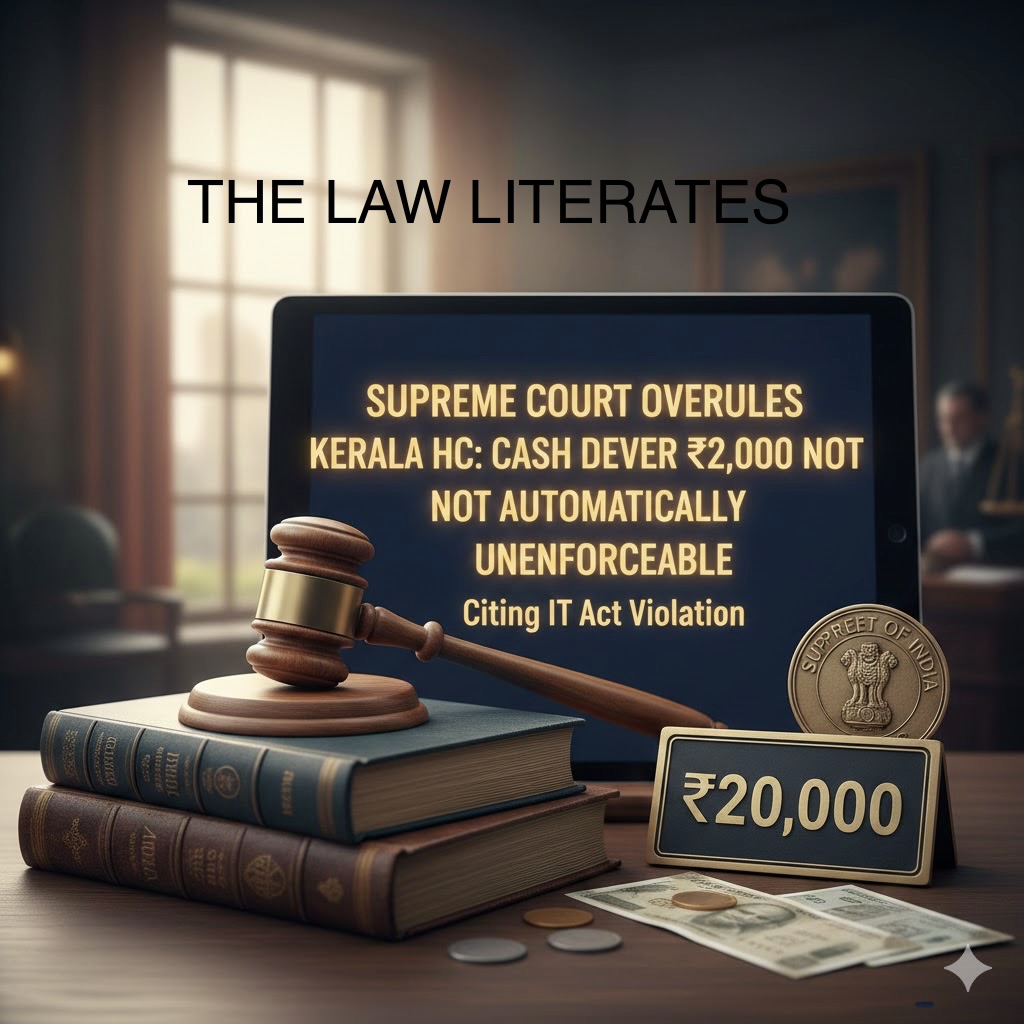
SC Holds Debt Arising from Cash Transaction Exceeding ₹20,000 (Violating IT Act) Can Still be ‘Legally Enforceable’ for Cheque Dishonour Cases
🏛️SUPREME COURT OF INDIA🏛️
SC Holds Debt Arising from Cash Transaction Exceeding ₹20,000 (Violating IT Act) Can Still be ‘Legally Enforceable’ for Cheque Dishonour Cases
Supreme Court recently set aside the Kerala High Court judgment in PC Hari v. Shine Varghese, which held that a debt created by a cash transaction above Rs.20,000 in violation of the Income Tax (IT) Act, 1961 cannot be considered as a “legally enforceable debt” under Section 138 of the Negotiable Instruments Act unless there is a valid explanation for the same.
For More read the Judgment click here
all rights Reserved (Vaibhav Tomar Adv)
Section 86 Order VII Rule 11 CPC Limitation – Suit against foreign state – Sovereign immunity and limitation grounds raised
Section 86 Order VII Rule 11 CPC Limitation – Suit against foreign state – Sovereign immunity and limitation grounds raised – Held, suit not barred by limitation as recurring cause of action applies Doctrine of laches/limitation not applicable to periodic claims – Sovereign immunity plea not upheld at this stage Suit reinstated for trial on merits.[Paras 7, 24 to 25]
Relevant Paras:
7. Due to persistent inaction by the Respondents, the Appellants resorted to legal remedies. After protracted correspondence and a writ petition before the Delhi High Court, the Appellants obtained the consent mandated under Section 86 of the Code of Civil Procedure from the Government of India by January 2013, enabling them to
institute civil proceedings against the foreign state For More please find the Judgment.
24. Lastly, learned counsel for the Respondents has also argued that the plaint was time barred and thus limitation is also a valid ground for rejection of plaint, although the learned Single judge, even while allowing his application, has rejected this ground. This Court concurs with the finding of the learned Single Judge that, prima facie, the present suit is not barred by limitation as the same is based on a recurring cause of action and that even if a part of the relief, i.e.,
payment of wages, sought in the plaint is barred by limitation, the Court can still exercise its discretion to mould the relief and grant recovery to the extent that is within limitation.
25. The Respondents counsel‟s reliance on Nikhila Dibyang Mehta & Anr. v. Hitesh P. Sanghvi & Ors.4 is misplaced, since it does not apply to a set of facts that give rise to a recurring cause of action and is only relevant to a „one time action‟. As has already been held in a catena of the Supreme Court judgments like MR Gupta v. Union of India5
, the doctrine of laches/limitation is not applicable where separate or distinct cause of action occurs periodically. Thus, the Respondents cannot be allowed to press this contention before this court.
Judgment Delhi High Court The Law Literates
All Rights Reserved (Adv Deepti Kumari LC- 2)
Custody and Care: Legal Insights for Parents
Child custody is one of the most sensitive aspects of family law, affecting both the well-being of the child and the rights of parents. When parents separate or divorce, determining who will take care of the child involves legal, emotional, and practical considerations. Understanding the laws and principles behind child custody can help parents make informed decisions that prioritize the child’s best interests.
Types of Child Custody
Child custody can be broadly classified into:
-
Physical Custody: Determines where the child will live and who will provide day-to-day care.
-
Legal Custody: Defines who has the authority to make important decisions regarding the child’s education, health, and welfare.
-
Joint Custody: Both parents share responsibilities and decision-making.
-
Sole Custody: One parent has primary responsibility, while the other may have visitation rights.
Courts aim to ensure that the child maintains a stable and nurturing environment, balancing the rights of both parents.
Factors Considered by Courts
When deciding on custody, courts consider:
-
Best interests of the child: Emotional, educational, and social needs
-
Parental capability: Ability to provide care, stability, and guidance
-
Child’s age and preference: Older children’s opinions may be taken into account
-
Parental cooperation: Willingness to encourage a relationship with the other parent
-
Safety and welfare: History of abuse, neglect, or domestic violence
The focus is always on the child’s overall well-being, rather than the convenience or preference of the parents.
Visitation Rights and Maintenance
Even if custody is awarded to one parent, the other parent is generally granted visitation rights to maintain a meaningful relationship with the child. Courts may also order child support or maintenance, ensuring that the child’s financial needs are met consistently.
Importance of Legal Guidance
Navigating child custody cases can be emotionally challenging and legally complex. A qualified lawyer can help parents:
-
Understand their rights and obligations
-
Prepare and file custody petitions or responses
-
Negotiate agreements or mediate disputes
-
Ensure compliance with court orders
-
Protect the child’s best interests throughout the process
Legal guidance ensures fairness and reduces unnecessary conflict during an already stressful period.
Conclusion
Child custody is not about winning or losing; it is about prioritizing the child’s happiness, safety, and development. By understanding custody laws, cooperating with the other parent, and seeking professional guidance, parents can make informed decisions that provide their children with stability and care.
Ultimately, the goal of child custody law is clear: to protect the rights of the child and ensure their well-being, even in the midst of parental separation.
Freedom in Advance: Understanding Anticipatory Bail
Anticipatory bail is a critical legal provision that protects individuals from being arrested in anticipation of a possible accusation or legal action. It is an important tool in criminal law, ensuring that a person’s right to liberty is safeguarded while balancing the interests of justice.
What Is Anticipatory Bail?
Anticipatory bail allows a person to seek bail before being arrested for an alleged offence. Unlike regular bail, which is sought after arrest, anticipatory bail acts as a preventive legal shield, helping individuals avoid unnecessary detention and harassment.
Key points about anticipatory bail:
-
It can be applied under Section 438 of the Indian Penal Code (CrPC).
-
It is typically granted by High Courts or Sessions Courts.
-
It applies to offences where the arrest is anticipated, not after it has occurred.
-
Courts may impose conditions to ensure the accused does not tamper with evidence or influence witnesses.
Who Can Apply for Anticipatory Bail?
Anticipatory bail is usually sought by individuals who:
-
Fear arrest due to false accusations or political/social vendetta
-
Are involved in cases where charges are non-bailable but not serious enough for severe imprisonment
-
Want to avoid unnecessary detention while cooperating with the investigation
The court evaluates the nature of the offence, likelihood of fleeing, and potential tampering with evidence before granting anticipatory bail.
Conditions and Limitations
While anticipatory bail offers protection, it is not absolute. Courts may impose conditions such as:
-
Appearing before the investigating officer when required
-
Cooperating fully with the investigation
-
Not threatening or influencing witnesses
-
Surrendering passports in certain cases
Certain serious offences, like those punishable by life imprisonment or death, may restrict the applicability of anticipatory bail depending on the circumstances.
Importance of Anticipatory Bail
Anticipatory bail plays a crucial role in protecting individual liberty and ensuring justice:
-
Prevents unwarranted arrests and harassment
-
Maintains the dignity and freedom of the accused
-
Encourages cooperation with law enforcement without fear of detention
-
Reduces overcrowding in prisons due to preventive detentions
It balances the rights of individuals with the requirements of law and public interest.
Conclusion
Anticipatory bail is a powerful legal safeguard, allowing individuals to protect their freedom before an arrest occurs. Understanding its provisions, conditions, and limitations empowers citizens to exercise their rights wisely.
In the pursuit of justice, anticipatory bail acts as a preventive shield, ensuring that liberty is not compromised while investigations proceed fairly and lawfully.
Digital Defense: Navigating Modern Cyber Matters
In today’s rapidly evolving digital world, technology has become deeply integrated into every aspect of life—from communication and finance to healthcare, education, and global business. While this interconnected ecosystem offers convenience and innovation, it also creates a vast playground for cyber threats. As cybercrime grows in scale, sophistication, and impact, digital defense is no longer optional—it’s essential.
The Rise of Modern Cyber Threats
Cyber threats have advanced beyond simple viruses or spam emails. Today’s attackers leverage artificial intelligence, automation, and social engineering to infiltrate systems and exploit vulnerabilities. Ransomware, phishing schemes, data breaches, identity theft, and advanced persistent threats (APTs) are now common occurrences across industries. Even small businesses and individuals, once considered low-risk targets, are now equally vulnerable.
Human Factor: The Weakest Link
Despite modern firewalls, encryption, and monitoring tools, human error remains one of the biggest cybersecurity weaknesses. A single click on a malicious link, the use of weak passwords, or failure to enable multi-factor authentication can open the door to devastating attacks. Cyber awareness and digital hygiene must become everyday habits—not occasional precautions.
Building a Stronger Cyber Shield
Effective digital defense requires a proactive and multi-layered approach. This includes:
-
Robust password and identity management
-
End-to-end encryption
-
Threat detection and real-time monitoring
-
Regular software updates and vulnerability testing
-
Employee training and cybersecurity culture
Cybersecurity must be treated as a continuous process, not a one-time investment.
The Role of Law and Policy
Governments across the world are implementing stricter cybersecurity regulations and data-protection frameworks. Compliance standards like GDPR, HIPAA, ISO 27001, and India’s Digital Personal Data Protection Act (DPDPA) ensure organizations are held accountable for protecting user data. As cyber matters evolve, these policies continue to adapt—balancing innovation with safety.
Future of Cyber Defense
With the rise of AI, quantum computing, and smart devices, the future of cybersecurity will rely heavily on automation, predictive security, and advanced analytics. Threat intelligence platforms, biometric authentication, and blockchain-based identity systems are shaping a more secure digital world.
Conclusion
Cybersecurity isn’t just a technical responsibility—it’s part of digital citizenship. As cyber threats grow, so must awareness, preparedness, and resilience. Protecting digital footprints, securing data, and adopting responsible online behavior are key steps toward a safer, smarter digital future.
Regular bail – Allegations of sexual assault on a minor girl – No DNA match between the accused and the victim – Delhi High Court
🏛️DELHI HIGH COURT 🏛️
HARISH vs STATE CRLMC 1481/25 10/10/25
Section 483 read with Section 528 BNSS POCSO ACT , 2012 Sections 6 and 21 Section 376AB IPC Regular bail application – Allegations of sexual assault on a minor girl – No DNA match between the accused and the victim – CCTV evidence inconclusive and not placing the accused in the classroom – Victim failed to identify the accused during deposition Prosecution failed to establish strong prima facie grounds of involvement – Bail granted subject to stringent conditions to ensure trial integrity and safety of victim and witnesses.
Relevant Paras
12. Thus, it emerges that the child has not identified the Applicant during
deposition, the CCTV does not place him in the classroom, and the FSL report discloses no DNA linkage. Without pre-judging credibility or the merits reserved for trial, these features at least create a prima facie doubt as to the Applicant’s involvement. A case for release on bail is therefore made out, subject to stringent conditions to safeguard the child and the integrity of the proceedings.
13. The nominal roll dated 24th June 2025 records that the Applicant has BAIL APPLN. 1481/2025 Page 8 of 10remained in custody for 1 year, 1 month and 23 days, and his jail conduct is noted to be satisfactory. The principal witnesses, including the child and her parents, have already been examined. The Applicant has no criminal antecedents and is a young man who supports his family. In these circumstances, with investigation concluded, charge sheet filed, and the key witnesses examined, continued incarceration risks straying into pre-trial punishment rather than serving the purposes of securing the proceedings. Liberty, once constrained, must be justified, not presumed.
14. In light of the foregoing discussion, the Applicant is directed to be released on bail on furnishing a personal bond for a sum of INR 25,000/- with one surety of the like amount, subject to the satisfaction of the Trial Court/Duty MM, on the following conditions:
To see the Judgment Click here
Harish vs State of NCT of Delhi Judgment Delhi High Court Bail order Pocso