Hindu Marriage Can’t Be Dissolved By Unilateral Declaration Executed On A Stamp Paper: Allahabad High Court

Vinod-Kumar-sant-ram-vs-shiv-rani-2024-[Allahabad-High-Court]
Hindu Marriage Can’t Be Dissolved By Unilateral Declaration Executed On A Stamp Paper: Allahabad High Court
6. A marriage between two Hindus can be dissolved only by modes recognized by the Hindu Marriage Act and unilateral declaration executed on a stamp paper worth Rs. 10/- is not a mode of dissolution by Hindu Marriage recognized by law. Therefore, the marriage between the parties was not dissolved in accordance with law and she continues to be legally wedded wife of the revisionist.
7. The Family Court has also recorded that the revisionist stated in his cross examination that he got married to one Sunita in his childhood. Some litigation took place between the revisionist and his first wife Sunita, which was closed in the year 2002. Thereafter the revisionist married the opposite party and got separated from her in the year 2005. In the year 2008, he married yet another lady Bina Pathak.
8. The Family Court has observed that the revisionist has not given any particulars of the litigation that took place between him and his first wife Sunita and no document relating to that litigation was brought on record by the revisionist.
9. Regarding the plea of delay of 14 years in filing the application under Section 125 Cr.P.C., the Family Court held that Section 125 Cr.P.C.does not prescribe any period of limitation for filing the application. The Family Court took into
consideration the statement of the opposite party that earlier she had filed an application for maintenance in the year 2011 but her brother died after some time and she was very sad, for this reason, she could not pursue the case. Thereafter, she filed the application in question.
10. The family Court concluded that without dissolution of marriage with the opposite party, the revisionist has married another lady Bina Pathak and three sons have borne out of the wedlock between the revisionist and Bina pathak and this gives rise to a sufficient cause for the opposite party to live separate from the revisionist.
11. There appears to be no error or illegality in the aforesaid findings of the family court.
12. Regarding quantum of maintenance, the Family Court noted the statement of the revisionist that he works as a priest. DW-2 Munna Lal alias Radhika Nandan stated that the applicant is M.A. in Sanskrit and he preaches Bhagwat Katha and performs other religious rituals as a priest.
13. Keeping in view the aforesaid facts, the Family Court directed the revisionist to pay Rs. 2200/- per month as maintenance to his wife-respondent.
14. The Family Court has passed the impugned order after taking into consideration all the relevant facts and circumstances of the case, as noted above and there is no error or illegality in any finding of the Family Court. The revisionist relied upon a decision of the High Court of Jharkhand at Ranchi in Amit Kumar Kachhap v. Sangeeta Toppo, Criminal Revision No. 512 of 2023 decided on 02.02.2024 wherein the Jharkhand High Court held that where the respondent had been residing aloof from the husband without any reasonable cause, the wife was not entitled to claim maintenance.
Digitally signed by :-
PRADEEP SINGH
High Court of Judicature at Allahabad, Lucknow Bench
15. There can be no dispute against the aforesaid proposition of law and it is in accordance with the statutory mandate contained under Section 125 (4) Cr.P.C. but when the marriage between the revisionist and the opposite party has not been dissolved by any manner known to law, it continues to subsist and the respondent having married another lady and having procreated three children from her, has given rise to a reasonable cause to the opposite party to live separate from the revisionist.
16. Even otherwise the application under Section 125 Cr.P.C. can be filed by the applicant even after dissolution of her marriage as has been held by the Hob’ble Supreme Court in Swapan Kumar Banerjee v. State of West Bengal, (2020) 19 SCC 342.
17. In these circumstances, the finding of the Family Court that the opposite party is living away from the revisionist because of sufficient cause, is absolutely correct and the judgment cannot be said to be vitiated on any score.
To read the judgment click here
vinod-kumar-sant-ram-vs-shiv-rani-2024-allahabad-high-court-The-Law-literates
All Rights Reserved (Adv Vaibhav Tomar)
MP high court set aside ex parte divorce decree on the ground that the the lady could not suffer due to mistake of her counsel

[ MADHYA PRADESH HIGH COURT ](1) FA No. 217 of 2015
Smt. Pushpa Devi vs. Santoshi Lal Sharma
Order 9, Rule 13 CPC Divorce petition Setting aside of ex parte decree Appellant had engaged as her lawyer for prosecuting her case in the divorce petition filed by her husband/respondent, who had assured her not to come to the Court on each date of hearing and he will call her as and when required – In the present matter, the appellant is 57 years old lady and could not be made to suffer on the fault of her counsel – She has given sufficient cause/reason for nonappearance of her/her counsel before the Court concerned whereby an ex parte judgment and decree has been passed against her – Appeal Allowed.
To read the judgment click here
FA_217_2015_FinalOrder_16-Sep-2021 Smt. Pushpa Devi vs. Santoshi Lal Sharma
All Rights Reserved (Vaibhav Tomar Adv)
Complaint filed by the second wife against the husband for the offense under Section 498-A of the IPC was not maintainable Conviction set aside.

IN THE HIGH COURT OF KARNATAKA AT BENGALURU
THE HON’BLE MR. JUSTICE S RACHAIAH CRIMINAL REVISION PETITION NO. 1372 OF 2019
KANTHARAJU VERSUS STATE OF KARNATAKA
• Sections 498A IPC Cruelty Complainant, who was the second wife of the petitioner, faced harassment and ill treatment from him, leading her to file a complaint Petitioner contended that since the complainant was the second wife, the basic ingredients of the provision did not apply Complainant in her evidence, being the mother of complainant both have consistently deposed and admitted that,she is the second wife of the petitioner Complaint filed by the second wife against the husband for the offense under Section 498-A of the IPC was not maintainable Conviction set aside.
Relevant Paras
9. On perusal of the above said provision, it shows that the husband or relative of a woman subjecting her to cruelty, shall be punished with imprisonment. It is needless to say that, “woman” in the said definition means and includes, legally wedded wife. As per the evidence of PWs.1 and 2, it is an admitted fact that, the complainant was the second wife of the petitioner.
10. The prosecution has to establish that, the marriage of PW.1 is legal or she is the legally wedded wife of the petitioner. Unless, it is established that, she is the legally wedded wife of the petitioner, the Courts below ought to have acted upon the evidence of PWs.1 and 2 that, PW.1 was the second wife. Once PW.1 is considered as second wife of the petitioner, obviously, the complaint filed against the petitioner for the offence under Section 498-A of IPC ought not to have been entertained. In other words, complaint filed by the second wife against the husband and her in-laws is not maintainable. The Courts below committed error in applying the principles and also the law on this aspect. Therefore, interference by this Court in exercising the Revisional jurisdiction is justified.
11. My view is fortified by the dictum Hon’ble Supreme Court in the cases stated supra. Now, it is relevant to refer the dictum of the Hon’ble Supreme Court to arrive at a conclusion as to whether the second wife is permitted to lodge the complaint against the husband for the offence under Section 498-A of IPC.

13. Similarly, the dictum of the Hon’ble Supreme Court in the case of P.Sivakumar, referred to supra, in para 7 of the said judgment, it reads thus:
“7. Undisputedly, the marriage between the appellant No.1 and PW-1 has been found to be null and void. As such the conviction under Section 498-A IPC would not be sustainable in view of the judgment of this Court in the case Shivcharan Lal Verma’s case supra. So far as the conviction under Sections 3 and 4 of the Dowry Prohibition Act is concerned, the learned trial Judge by an elaborate reasoning, arrived at after appreciation of evidence, has found that the prosecution has failed to prove the case beyond reasonable doubt. In an appeal/revision, the High Court could have set aside the order of acquittal only if the findings as recorded by the trial Court were perverse or impossible.”
14. The ratio of these two judgments of the Hon’ble Supreme Court clearly indicates that, if the marriage between the husband and wife ended as null and void, the offence under Section 498-A of IPC cannot be sustained.
15. Admittedly, in the present case, the complainant in her evidence, PW.2 being the mother of PW.1 both have consistently deposed and admitted that, PW.1 is the second wife of the petitioner. Accordingly, the concurrent findings of the Courts below in recording the conviction requires to be set aside.
To read the Judgment click here
CRLRP1372-19-17-07-2023 KANTHARAJU VERSUS STATE OF KARNATAKA JUDGMENT THE LAW LITERATES
All Rights Reserved (Pooja Giri Adv)
Hindu Marriage Act Section 11 Suit to declare marriage as null and void Earlier Court has provided protection on application of appellant and respondent- Appeal allowed
SHAVETA VERSUS AJAY RSA
3353/18 02/08/19 CORAM:- HON’BLE MS. JUSTICE JAISHREE THAKUR
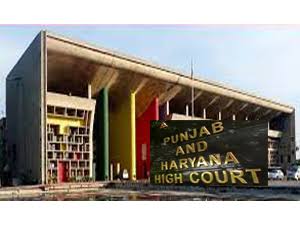
[ PUNJAB HARYANA HIGH COURT ]
• Hindu Marriage Act Section 11 Suit to declare marriage as null and void Earlier Court has provided protection on application of appellant and respondent Marriage stated to have been performed in Gurdawara as per Sikh rites and customs Suit for declaration to the effect that marriage was null and void brought by plaintiff alleging she had no free consent in alleged marriage Granthi of Gurdawara appeared and stated that no ceremonies performed Perusal of Criminal Misc. petition filed for protection reflects photographs of both appellant and respondent before Holy book but there is no marriage certificate as issued by Granthi of Gurdwara attached with petition nor are there any photographs attached showing them taking required steps around holy book – No certificate of marriage issued by Registrar of Marriages – Once statement of Granthi goes unrebutted, Court can safely presume that in fact, no marriage had taken place – Appeal allowed. [ Para 10]*_
Relevant Paras
10. In such a situation, would the appellant herein be entitled to declaration that the marriage between the parties on 21.8.2014 is null and void? As per provisions of the Hindu Marriage Act, 1955, certain ceremonies are required to be performed for a marriage to be declared as legal and binding, one of them being taking of steps around the holy book or a sacred fire and in the instant case around the ‘Guru Granth Sahib’, as per the customs followed by the Sikhs. In the instant case, there is a categoric statement of the Granthi of the Gurdwara, which goes unrebutted, stating that there was no ceremony performed at the Gurdwara on 21.8.2014 between the appellant and the respondent and that is the case that has also been set up by the appellant herein that her signatures were forged and misused, while filing a petition seeking protection before this Court. A perusal of the Criminal Misc. petition that had been filed reflects the photographs of both the appellant and the respondent before the Holy book but there is no marriage certificate as issued by the Granthi of a Gurdwara attached with the petition nor are there any photographs attached showing them taking required steps around the holy book; nor there is any certificate of marriage issued by the Registrar of Marriages. Moreover, the High Court did not opine on the validity of the marriage, while deciding the aforesaid petition seeking protection. Once the statement of the Granthi goes unrebutted, this Court can safely presume that in fact, no marriage had taken place between the parties and if no such marriage subsisted this Court is notin a position to declare the marriage null and void.
11. The judgment as relied by the learned counsel for the appellant
would not be applicable in the instant case since the facts are slightly different. In Samar Kumar Roy’s case (supra), the marriage had been registered, which is not so in the instant case.
12. In view of what has been stated above, this appeal is disposed of holding that there is no evidence available on the record to substantiate that a marriage had in fact taken place on 21.8.2014 between the appellant and the respondent herein. However, the defendant herein is restrained from interfering in the peaceful life and property of the appellant or claiming himself to be her husband.
For read the judgment click here
_ Shaveta vs Ajay 02_08_2019_FINAL_ORDER the law literates
all rights reserved (Vaibhav Tomar 𝔸𝕕𝕧)
Section 125 CRPC Maintenance/Increased maintenance/Supreme Court of India
ANJU vs DEEPAK CRL-A 1693/22 28/09/22 [ DINESH JJ
• Section 125 CRPC Maintenance for wife and children Held, conduct of Respondent in not appearing before the Family Court despite issuance of warrants, clearly established his disregard for law and for his own family As his evidence was closed, allegations made by wife in her evidence remained unchallenged Wife clearly stated as to how harassment and cruelty as also neglect by husband led her to leave her matrimonial home with her children Documentary evidence led by her proved husband’s demand for money from her father – Thus, no reason for Family Court to disbelieve her version and believe oral submissions made by respondent which were not supported by evidence – Husband even questioned her chastity without any supporting evidence – Though Family Court rejected his application for DNA test and granted maintenance to son, it mis-directed itself by not granting maintenance to wife – Therefore, High Court erred in casually approving Family Court’s order without giving any reasons. [Paras 11 and 12]
11) it has been stated that it is a piece of social legislation which provides for a summary and speedy relief by way of maintenance to a wife who is unable to maintain herself and her children”. disregarded the aforesaid settled legal position, but had proceeded with the proceedings in absolutely pervert manner. The very fact that the right of the respondent to cross-examine the witnesses of the appellant-original applicant was closed, as he had failed to appear before the Family Court despite the issuance of warrants, clearly established that he had no regards for his own family nor had any regards for the Court or for the law. The allegations made by the appellant-wife in her evidence before the Court had remained unchallenged and, therefore, there was no reason for the Family Court to disbelieve her version, and to believe the oral submissions made by the learned counsel appearing for the respondent which had no basis. In absence of any evidence on record adduced by the respondent disputing the evidence adduced by the appellant, the Family Court could not have passed the order believing the oral submissions of the learned counsel for the respondent. She had clearly stated as to how she was harassed and subjected to cruelty by the respondent, which had constrained her to leave the matrimonial home along with her children, and as to how the respondent had failed and neglected to maintain her and her children. She had also proved by producing the documentary evidence that her father had paid money to the respondent from time to time to help the respondent for his business. Even if the allegations of demand of dowry by the respondent were not believed, there was enough evidence to believe that money was being paid to the respondent by the father of the appellant-wife, which substantiated her allegation that the
respondent was demanding money from her father and was subjecting her to harassment. The errant respondent had also gone to the extent of questioning her chastity alleging that Rachit was not his biological son. There was nothing on record to substantiate his such baseless allegations. His application for DNA test was also rejected by the Family Court. Of course, the Family Court granted the Maintenance petition so far as the appellant no.2-son was concerned, nonetheless had thoroughly mis-directed itself by not granting the maintenance to the appellant-wife.
12) Such an erroneous and perverse order of Family Court was unfortunately confirmed by the High Court by passing a very perfunctory impugned order. The High Court, without assigning any reasons, passed the impugned order in a very casual manner. This Court would have remanded the matter back to the High Court for considering it afresh, however considering the fact that the matter has been pending before this Court since the last four years, and remanding it back would further delay the proceedings, this Court deemed it proper to pass this order.
click here for read the judgment
Judgement_28-Sep-2022 ANJU GARG & ANR. APPELLANT(S) VERSUS DEEPAK KUMAR GARG
All rights reserved (Adv Alka Singh)
Hindu Marriage Act Section 9 Writ of habeas corpus Custody of minor child Petitioner is the natural guardian of his minor child But for some bald allegations made against him, there is no reason to be believe that he would not conduct himself as a good and caring father/High Court of Punjab & Haryana
SANDEEP vs STATE OF HARYANA CRLWP 8954/12 16/09/21
•Hindu Marriage Act Section 9 Writ of habeas corpus Custody of minor child Petitioner is the natural guardian of his minor child But for some bald allegations made against him, there is no reason to be believe that he would not conduct himself as a good and caring father – Divorce and custody battles can become a quagmire and it is heart wrenching to see that the innocent child is the ultimate sufferer who gets caught up in the legal and psychological battle between the parents. The eventful agreement about custody may often be a reflection of the parents’ interests, rather than the child’s. The issue in a child custody dispute is what will become of the child, but ordinarily the child is not a true participant in the process. While the best-interests principle requires that the primary focus be on the interests of the child, the child ordinarily does not define those interests himself nor does he have representation in the ordinary sense Custody of minor child to father.
click here for the judgment
Sandeep Kumar @ Sandeep Chugh Versus State of Haryana and Others FINAL_ORDER