Section 376(2) (g), 342 read with Section 34 IPC Rape Acquittal Conviction on based on sole testimony of the prosecutrix In the evidence of prosecutrix as well as in the evidence of PW2, it has come on record that there are three houses in between the house of the prosecutrix and house of the accused

CRIMINAL APPEAL NO. 1205 OF 2021
IN THE SUPREME COURT OF INDIA
VED PAL & ANR. VS STATE OF HARYANA
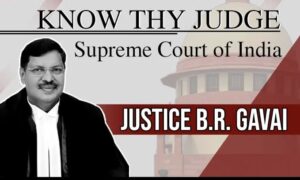
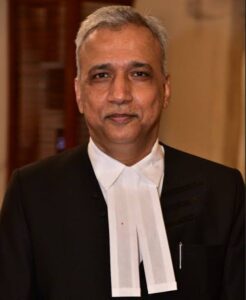
JUSTICE B.R. GAVAI
• Section 376(2) (g), 342 read with Section 34 IPC Rape Acquittal Conviction on based on sole testimony of the prosecutrix In the evidence of prosecutrix as well as in the evidence of PW2, it has come on record that there are three houses in between the house of the prosecutrix and house of the accused, where the incident is alleged to have taken place It is clear that even according to the prosecution, the prosecutrix was dragged from her house to the house of accused It is difficult to believe that, at that time, the prosecutrix did not make any cries/hues It is further to be noted that in the medical evidence, the Doctor has specifically stated that no injuries were found on the person of the prosecutrix Though he has opined that the possibility of the sexual intercourse could not be ruled out, he has also stated that the possibility of intercourse earlier to the MLR cannot be ruled out – It is further to be noted that the FSL report further finds that no semen was found on the clothes of the prosecutrix or on the vaginal swab – Semen was found on the underwear of accused – It is to be noted that the accused have taken a specific defence that there was a civil dispute between grand-father of the appellant(s) and the grand-father of the prosecutrix – No doubt that the said suggestion is once denied by the prosecutrix and on other occasion she has stated that she is not aware about the same – Though the prosecutrix admits the letter addressed by her to accused, in the next blush, she states that she has neither visited the house of the accused nor accused has visited to her house – Taking into consideration the fact that the both the prosecutrix and the appellant(s) reside within the vicinity of three houses, the said version is difficult to believe – Prosecution has failed to prove the case beyond a reasonable doubt, and therefore, the Appellants are entitled to the benefit of the doubt – Appeal allowed.

Relevant Paras:
9. However, in the present case, upon the consideration of the entire evidence together, we find that the prosecution has failed to prove the case against the appellants beyond reasonable doubt.
10. In the evidence of prosecutrix as well as in the evidence of P.W.2, it has come on record that there are three houses in between the house of the prosecutrix and house of the accused Suresh, where the incident is alleged to have taken place.
11. As such, it is clear that even according to the prosecution, the prosecutrix was dragged from her house to the house of accused Suresh. It is difficult to believe that, at that time, the prosecutrix did not make any cries/hues.
12. It is further to be noted that in the medical evidence, the Doctor has specifically stated that no injuries were found on the person of the prosecutrix. Though he has opined that the possibility of the sexual intercourse could not be ruled out, he has also stated that the possibility of intercourse earlier to the MLR cannot be ruled out. It is further to be noted that the FSL report further finds that no semen was found on the clothes of the prosecutrix or on the vaginal swab. The semen was found on the underwear of accused Suresh.

13. It is to be noted that the accused have taken a specific defence that there was a civil dispute between grand-father of the appellant(s) and the grand-father of the prosecutrix. No doubt that the said suggestion is once denied by the prosecutrix and on other occasion she has stated that she is not aware about the same. Though the prosecutrix admits the letter addressed by her to accused Suresh, in the next blush, she states that she has
neither visited the house of the has visited to her house. consideration the fact that prosecutrix and the appellant(s) vicinity of three houses, the difficult to believe.
14. In the totality of the circumstances, we find that the prosecution has failed to prove the case beyond reasonable doubt. The accused are entitled to benefit of doubt.
15. The impugned judgment and order dated 15th July, 2019 passed by the High Court as well as the orders dated 28th January, 2004/29th January, 2004 passed by learned Additional District Judge (Adhoc) are quashed and set aside and the appeal is allowed.
To read the Judgment click here:
VED PAL & ANR. STATE OF HARYANA the law literates Vaibhav Tomar
All Rights Reserved (𝔸𝕕𝕧 Aashna Suri)
Specific Relief Act Section 39 Section 151 CPC Suit for declaration and permanent injunction with respect to Indian Olympic Association Election, 2022 Provision of Section 39 provides for mandatory injunction which may be granted by Court in case it is deemed necessary that to prevent breach o obligation

CORAM:
HON’BLE MR. JUSTICE CHANDRA DHARI SINGH
HIGH COURT OF DELHI CS(OS) 804/2022
DR AJIT ANNASAHEB SHINDE ….. Plaintiff
versus
INDIAN ORTHOPAEDIC ASSOCIATION & ORS….. Defendants
• Specific Relief Act Section 39 Section 151 CPC Suit for declaration and permanent injunction with respect to Indian Olympic Association Election, 2022 Provision of Section 39 provides for mandatory injunction which may be granted by Court in case it is deemed necessary that to prevent breach o obligation, certain act is required be omitted or compelled to be done – Such injunction may be granted to aggrieved party when, first, there is obligation on part of defendant to perform certain acts but same breached and secondly, relief sought by aggrieved party is enforceable by court – Therefore, apparent that relief under section 39 of Specific Relief Act, 1963 is not one which may be granted in routine manner – Instead, stricter judicial scrutiny is to be exercised in cases where at the interim stage, mandatory injunction is sought – In present case, plaintiff has sought relief against defendants in form of directions from High Court to preserve data of Elections and to provide him with same – Plaintiff made several allegations against defendants to allege that IOA Elections, 2022 not conducted in transparent, legal and valid manner – Averments pertaining to illegalities in election process are subject matter of suit on merits which are not entered into at this stage for purposes of adjudicating instant application – Hence, dismissal of suit for mandatory injunction upheld.
Relevant Paras:
24. The provision provides for a mandatory injunction which may be granted by a Court in case it is deemed necessary that to prevent a breach of an obligation, a certain act is required be omitted or compelled to be done. Such injunction may be granted to an aggrieved party when, first, there is an obligation on part of the defendant to perform certain acts but the same has been breached and secondly, the relief sought by the aggrieved party is enforceable by the court.
25. The Hon’ble Supreme Court in the matter of Samir Narain Bhojwani vs. Aurora Properties & Investments, (2018) 17 SCC 203, elaborated upon the scope of Section 39 of the Specific Relief Act, 1963 and opined as under: M “24. …… The nature of order passed against the appellant is undeniably a mandatory order at an interlocutory stage. There is marked distinction between moulding of relief and granting mandatory relief at an interlocutory stage. As
regards the latter, that can be granted only to restore the status quo and not to establish a new set of things differing from the state which existed at the date when the suit was instituted. This Court in Dorab Cawasji Warden v. Coomi Sorab Warden [Dorab Cawasji Warden v. Coomi Sorab Warden, (1990) 2 SCC 117] , has had occasion to consider the circumstances warranting grant of interlocutory mandatory injunction. In paras 16 & 17, after analysing the legal precedents on the point as noticed in paras 11-15, the Court went on to observe as follows : (SCC pp. 126-27)
“16. The relief of interlocutory mandatory injunctions
are thus granted generally to preserve or restore the
status quo of the last non-contested status which
preceded the pending controversy until the final
hearing when full relief may be granted or to compel
the undoing of those acts that have been illegally done
or the restoration of that which was wrongfully taken
from the party complaining. But since the granting of
such an injunction to a party who fails or would fail to
establish his right at the trial may cause great injustice
or irreparable harm to the party against whom it was
granted or alternatively not granting of it to a party
who succeeds or would succeed may equally cause
great injustice or irreparable harm, courts have
evolved certain guidelines. Generally stated these
guidelines are:
(1) The plaintiff has a strong case for trial. That is,
it shall be of a higher standard than a prima facie
case that is normally required for a prohibitory
injunction.
(2) It is necessary to prevent irreparable or serious
injury which normally cannot be compensated in
terms of money.
(3) The balance of convenience is in favour of the
one seeking such relief.
17. Being essentially an equitable relief the grant or
refusal of an interlocutory mandatory injunction shall
ultimately rest in the sound judicial discretion of the court to be exercised in the light of the facts and circumstances in each case. Though the above guidelines are neither exhaustive nor complete or absolute rules, and there may be exceptional circumstances needing action, applying
them as prerequisite for the grant or refusal of such
injunctions would be a sound exercise of a judicial
discretion.”
(emphasis supplied)
25. The Court, amongst others, rested its exposition on the dictum in Halsbury’s Laws of England, 4th Edn., Vol. 24,
“948. Mandatory injunctions on interlocutory
applications.—A mandatory injunction can be granted
on an interlocutory application as well as at the
hearing, but, in the absence of special circumstances,
it will not normally be granted. However, if the case is
clear and one which the court thinks ought to be
decided at once, or if the act done is a simple and
summary one which can be easily remedied, or if the
defendant attempts to steal a march on the plaintiff,
such as where, on receipt of notice that an injunction is about to be applied for, the defendant hurries on the work in respect of which complaint is made so that
when he receives notice of an interim injunction it is
completed, a mandatory injunction will be granted on
an interlocutory application.”
26. The principle expounded in this decision has been
consistently followed by this Court. It is well established that an interim mandatory injunction is not a remedy that is easily granted. It is an order that is passed only in circumstances which are clear and the prima facie material clearly justify a finding that the status quo has been altered by one of the parties to the litigation and the interests of justice demanded that the status quo ante be restored by way of an interim mandatory injunction.
[See Metro Marins v. Bonus Watch Co. (P) Ltd. [Metro Marins v. Bonus Watch Co. (P) Ltd., (2004) 7 SCC 478], Kishore Kumar Khaitan v. Praveen Kumar
Singh [Kishore Kumar Khaitan v. Praveen Kumar Singh, (2006) 3 SCC 312] and Purshottam Vishandas
Raheja v. Shrichand Vishandas Raheja [Purshottam
Vishandas Raheja v. Shrichand Vishandas Raheja, (2011) 6 SCC 73 : (2011) 3 SCC (Civ) 204] .]
26. Therefore, it is apparent that the relief under Section 39 of the Specific Relief Act, 1963 is not one which may be granted in a routine manner. Instead, stricter judicial scrutiny is to be exercised in cases where NEUTRAL CITATION No.2023:DHC:3492
CS(OS) 804/2022 Page 10 of 13 at the interim stage, mandatory injunction is sought. As reiterated by the
Hon’ble Supreme Court in the aforementioned judgment, while adjudicating upon an application for mandatory injunction, the important consideration is that such a relief may be granted only to restore the status quo and not to establish a new set of things differing from the state which existed at the date when the suit was instituted. It is only in cases where
the circumstances invite intervention of the court at an interim stage for the reason that there is a likelihood of alteration of the status quo that a
relief of mandatory injunction may be granted.
For read the Judgment click here
DR AJIT ANNASAHEB SHINDE versus INDIAN ORTHOPAEDIC ASSOCIATION & ORS. JUDGMENT DELHI HIGH COURT
All rights reserved (𝔸𝕕𝕧 Vaibhav Tomar)
Section 182 IPC Section 468 CRPC Quashing of kalandra and proceedings Limitation Period for cognizance Limitation period of one year would start from the date when the cancellation report was prepared by the investigating agency Mere pendency of FIRs /Punjab HC/Queshed

Tekchand Sharma vs State of Punjab
CRMM 6089/20 10/07/23 [ Harsimran Singh Sethi Justice ]
[ PUNJAB HARYANA HIGH COURT ]
Section 182 IPC Section 468 CRPC Quashing of kalandra and proceedings Limitation Period for cognizance Limitation period of one year would start from the date when the cancellation report was prepared by the investigating agency Mere pendency of FIRs on the date of the registration of impugned DD will not extend the limitation period DD was registered after expiry of limitation period one year of preparation of cancellation period Thus, all the proceedings arising from said DD were not maintainable, hence quashed.
Relevant Paras:
4. The petitioner argues that keeping in view the limitation period provided under Section 468 Cr.P.C. as the maximum punishment provided under Section 182 IPC is 6 months imprisonment, the DD No.15, dated 25.01.2020 could have only been got registered within a period of one year of the cancellation report, whereas the same was registered much after the expiry of the limitation provided under Section 468 of the Cr.P.C. hence, the same is liable to be quashed being not maintainable.
5. Learned counsel for the respondent on the other hand submits that though the cancellation report was submitted on the dates mentioned by the petitioner as recorded hereinbefore but as the FIRs were pending, the registration of the DD No.15 dated 25.01.2020, is to be treated within the limitation as provided under Section 468 of Cr.P.C.
6. I have heard learned counsel for the parties and have gone through the record with their able assistance.
7. It is a conceded position that in the present petition, the challenge is to the DD No.15 dated 25.01.2020. It is also a conceded position that the maximum punishment provided, in case the allegations are proved under Section 182 IPC, is 6 months imprisonment. Section 468 of the Cr.P.C. provides limitation for taking cognizance of the offence. Section 468 Cr.P.C., is reproduced herein for the ready reference:-
468. Bar to taking cognizance after lapse of the period of limitation:-
(1) Except as otherwise provided elsewhere in this Code, no Court shall take cognizance of an offence of the category specified in sub-section (2), after the expiry of the period of limitation.
(2) The period of limitation shall be-
(a) six months, if the offence is punishable with fine only;
b) one year, if the offence is punishable with imprisonment for a term not exceeding one year;
c) three years, if the offence is punishable with imprisonment for term exceeding one year but not exceeding three years.
(3) For the purposes of this section, the period of limitation, in relation to offences which may be tried together, shall be determined with reference to the offence which is punishable with the more severe punishment or, as the case may be, the most severe punishment.
8.As per Section 468 (2) Cr.P.C., where the offence is punishable with imprisonment for a term not exceeding one year, the limitation period is one year, hence, in the present case the limitation period would start from the date when the cancellation report was prepared by the investigating agency.
9. In the facts and circumstances of the case, it is clear that it was only uptill 28.09.2019 that the action could have been initiated by the investigating agency under Section 182 of the IPC, whereas the present DD No.15 dated 25.01.2020, was registered after the expiry of the limitation period as provided under Section 468(2) of Cr.P.C.
10. Learned counsel for the respondent has not been able to point out, as to how mere the pendency of the FIRs on the date of the registration of the impugned DD, will extend the limitation especially the allegation alleged in the DD were based upon the cancellation report submitted on 17.09.2018 in respect of FIR No.190 dated 01.08.2016 and cancellation report dated 28.09.2018 in respect of FIR No.130, dated 07.08.2014, registered at Police Station Hasanpur, District Palwal.
For read the judgment click here
All rights Reserved (Saba Hasan) Adv
Directions for judicial officers From Registrar General Delhi High Court

HIGH COURT OF DELHI: NEW DELHI
No. 12-24/ Registrar General/DHC/2023
Dated: 01.12.2023
Subject: Directions for judicial officers From Registrar General Delhi High Court
(1) The judicial officers shall maintain punctuality and strictly adhere to the Court timings.
(2) The judicial officers shall fix sufficient number of cases every day
so as to keep them substantially busy during the course o f the day.
(3)The judicial officers shall ensure that the VC links of their respective Courts remain functional/ open from 10.AM_to 4.00 PM on every working day.
(4) Wherever judgments have been reserved, the judicial officers shall pronounce the judgments within the time period stipulated in law and where no such period is stipulated, such judgements be pronounced as expeditiously as possible, but not later than 60 days from the date of conclusion of final arguments.
(5) The judicial officers shall ensure that all orders and judgments are
timely uploaded and all relevant data relating to cases is regularly updated on CIS.
(6) The judicial officers shall take all requisite steps for expeditious disposal o f 5 year old and 10 year old cases.
(7) Wherever e-filing is mandated in terms of the E-filing Rules of the High Court o f Delhi, 2021 the judicial officers shall ensure that the provisions in this respect are scrupulously complied with.
For read the circular click here
Directions for Judicial officers Vaibhav Tomar
All rights reserved
Cheque Holder’s Failure To Record Loan In Books Not Ground To Dismiss Complaint U/S 138 NI Act: Bombay High Court

Cheque Holder’s Failure To Record Loan In Books Not Ground To Dismiss Complaint U/S 138 NI Act: Bombay High Court
THE HIGH COURT OF JUDICATURE AT BOMBAY NAGPUR BENCH, NAGPUR
CRIMINAL APPEAL NO. 795/2018
(PRAKASH MADHUKARRAO DESAI VERSUS DATTATRAYA SHESHRAO DESAI)
CORAM : A. S. CHANDURKAR AND MRS VRUSHALI V. JOSHI, JJ.
JUNE 13, 2023 DATE ON WHICH ORDER IS PRONOUNCED : AUGUST 19, 2023
Whether in case the transaction, is not reflected in the Books of account and/or the Income Tax Returns of the holder of the cheque in due course and thus is in violation to the provisions of Section 269-SS of the Income Tax Act, 1961 whether such a transaction, can be held to be “a legally enforceable debt” and can be permitted to be enforced, by institution of proceedings under Section 138 of the Negotiable Instruments Act
6. At the outset, we may state that the question as framed deserves to be segregated in two parts for the reason that failure to record a transaction in the books of account and/or the Income Tax returns of the holder of the cheque and violation of Section 269-SS of the Act of 1961 are independent and distinct acts. Both can arise either together or independently. Hence, the question as framed is modified to read as under:-
“Whether in case the transaction is (a) not reflected in the books of account and/or the Income Tax returns of the holder of the cheque in due course and/or (b) is in violation of the provisions of Section 269-SS of the Act of 1961, the same can be held to be a “legally enforceable debt” and can be permitted to be enforced by institution of proceedings under Section 138 of the Act of 1881 ?
7. With a view to answer the aforesaid question, we may note the relevant statutory provisions that having bearing on the question to be answered :-
Section 118 of the Act of 1881 reads as under :-
“118. Presumptions as to negotiable instruments. – Until the contrary is proved, the following presumptions shall be made:- (a) of consideration. – that every negotiable instrument was made or drawn for consideration, and that every such instrument, when it has been accepted, endorsed, negotiated or transferred, was accepted, endorsed, negotiated or transferred for consideration;
(b) as to date. – that every negotiable instrument bearing a date was made or drawn on such date;
(c) as to time of acceptance. – that every accepted bill of exchange was accepted within a reasonable time after its date and before its maturity;
(d) as to time of transfer. – that every transfer of a negotiable instrument was made before its maturity;
(e) as to order of endorsements. – that the endorsements appearing upon a negotiable instrument were made in the order in which they appear thereon;
(f) as to stamp. – that a lost promissory note, bill of exchange or cheque was duly stamped;
(g) that holder is a holder in due course. – that the holder of a negotiable instrument is a holder in due course:
Provided that, where the instrument has been obtained from its lawful owner, or from any person in lawful custody thereof, by means of an offence or fraud, or has been obtained from the maker or acceptor thereof by means of an offence or fraud, or for unlawful consideration, the burden of proving that the holder is a holder in due course lies upon him.”
Sections 138 and 139 of the Act of 1881 read as under :-
“138. Dishonour of cheque for insufficiency, etc., of funds in the account. –
Where any cheque drawn by a person on an account maintained by him with a banker for payment of any amount of money to another person from out of that account for the discharge, in whole or in part, of any debt or other liability, is returned by the bank unpaid, either because of the amount of money standing to the credit of that account is insufficient to honour the cheque or that it exceeds the amount arranged to be paid from that account by an agreement made with that bank, such person shall be deemed to have committed an offence and shall, without prejudice to any other provision of this Act, be punished with imprisonment for [a term which may be extended to two years], or with fine which may extend to twice the amount of the cheque, or with both:
Provided that nothing contained in this Section shall apply unless –
(a) the cheque has been presented to the bank within a period of six months from the date on which it is drawn or within the period of its validity whichever is earlier;
(b) the payee or the holder in due course of the cheque, as the case may be, makes a demand for the payment of the said amount of money by giving a notice in writing, to the
drawer of the cheque, [within thirty days] of the receipt of information by him from the bank regarding the return of the cheque as unpaid; and
(c) the drawer of such cheque fails to make the payment of the said amount of money to the payee or as the case may be, to the holder in due course of the cheque within fifteen days of the receipt of the said notice.
Explanation. – For the purposes of this Section, “debt or other liability” means a legally enforceable debt or other liability.
139. Presumption in favour of holder. – It shall be presumed, unless the contrary is proved, that the holder of a cheque received the cheque, of the nature referred to in Section 138, for the discharge, in whole or in part, of any debt or other liability.”
8. Section 269-SS of the Act of 1961 reads as under :-
“Mode of taking or accepting certain loans, deposits and specified sum.
269-SS. – No person shall take or accept from any other person (herein referred to as the depositor), any loan or deposit or any specified sum, otherwise than by an account payee cheque or account payee bank draft or use of electronic clearing system through a bank account [or through such other electronic mode as may be prescribed], if, –
(a) the amount of such loan or deposit or specified sum or the aggregate amount of such loan, deposit and specified sum; or
(b) on the date of taking or accepting such loan or deposit or specified sum, any loan or deposit or specified sum taken or accepted earlier by such person from the depositor is remaining unpaid (whether repayment has fallen due or not), the amount or the aggregate amount remaining unpaid; or
(c) the amount or the aggregate amount referred to in clause (a) together with the amount or the aggregate amount referred to in clause (b), is twenty thousand rupees or more:
Provided that the provisions of this section shall not apply to any loan or deposit or specified sum taken or accepted from, or any loan or deposit or specified sum taken or accepted by, –
(a) the Government;
(b) any banking company, post office savings bank or co-
operative bank;
(c) any corporation established by a Central, State or Provincial Act;
(d) any Government company as defined in clause (45) of section 2 of the Companies Act, 2013 (18 of 2013);
(e) such other institution, association or body or class of institutions, associations or bodies which the Central Government may, for reasons to be recorded in writing, notify in this behalf in the Official Gazette:
Provided further that the provisions of this Section shall not apply to any loan or deposit or specified sum, where the person from whom the loan or deposit or specified sum is taken or accepted and the person by whom the loan or deposit or specified sum is taken or accepted, are both having agricultural income and neither of them has any income chargeable to tax under this Act:
[Provided also that the provisions of this section shall have effect, as if for the words “twenty thousand rupees”, the words “two lakh rupees” had been substituted in the case of any deposit or loan where, –
(a) such deposit is accepted by a primary agricultural credit society or a primary co-operative agricultural and rural development bank from its member; or
(b) such loan is taken from a primary agricultural credit society or a primary co-operative agricultural and rural development bank by its member.]
Explanation. – For the purposes of this section, –
(i) “banking company” means a company to which the provisions of the Banking Regulation Act, 1949 (10 of 1949) applies and includes any bank or banking institution referred to in section 51 of that Act;
[(ii) “co-operative bank”, “primary agricultural credit society” and “primary co-operative agricultural and rural development bank” shall have the meanings respectively assigned to them in the Explanation to sub-section (4) of section 80P;]
(iii) “loan or deposit” means loan or deposit of money;
9 APEAL795-18.odt
(iv) “specified sum” means any sum of money receivable, whether an advance or otherwise, in relative to transfer of an immovable property, whether or not the transfer takes place.]”
9. The provisions of Sections 118, 138 and 139 of the Act of 1881 have been considered in various decisions of the Hon’ble Supreme Court. In Hiten P. Dalal (supra) it was held that Sections 138 and 139 require that the Court “shall presume” the liability of the drawer of the cheque. In every case where the factual basis for raising of the presumption is established, it is obligatory for the Court to raise this presumption. In Rajaram Sriramulu Naidu (supra) after referring to a recent decision in Basalingappa Versus Mudibasappa [(2019) 5 SCC 418] it has been observed that once the execution of the cheque is admitted, Section 139 of the Act of 1881 mandates a presumption that the cheque was for a discharge of any debt or other liability. The said presumption is a rebuttable presumption and the onus is on the accused to raise a probable defence. It is open for the accused to rely upon the evidence led by him or he can also rely on the material submitted by the complainant for raising a probable defence. The facts in Rajaram Sriramulu Naidu (supra) indicate that the complainant had failed to declare in his Income Tax returns that he had lent an amount of Rupees Three Lakhs to the accused. The accused examined the Income Tax Officer who produced the certified copies of the complainant’s Income Tax returns for the relevant period. On that premise the trial Court held that from the income shown in the Income Tax returns it was clear that the complainant did not have financial capacity to lend the money in question. The accused further examined the Officers from the Bank to substantiate his defence. After considering all this evidence, the trial Court found that the case of the complainant that he had given a loan to the accused from his agricultural income was unbelievable. The defence raised by the accused was found to be a possible defence and the accused was held entitled to the benefit of doubt. On this principle the trial court held that the accused had rebutted the presumption and acquitted him. The Hon’ble Supreme Court observed that the defence raised by the appellant
10 APEAL795-18.odt
satisfied the standard of preponderance of probabilities. It therefore did not interfere with the acquittal of the accused.
Though the learned counsel for the accused sought to rely upon the aforesaid decision to urge that absence of the income being disclosed in the Income Tax returns was sufficient to hold that the debt was not legally enforceable, we do not find that this is the ratio in Rajaram Sriramulu Naidu (supra). The acquittal of the accused was not on the ground that the amount advanced by the complainant was not disclosed in the Income Tax returns and hence the debt was not legally recoverable. On the contrary the Hon’ble Supreme Court has referred to the presumption under Section 139 of the Act of 1881 that when the execution of the cheque is admitted the same mandates the presumption that the cheque was for the discharge of any debt or other liability. The acquittal of the accused was because the defence raised by him satisfied the standard of preponderance of probabilities that the complainant had no capacity to lend the amount of Rupees Three Lakhs to the accused.
Relevant Paras:
A learned Single Judge of the Madras High Court in K.T.S.Sharma Versus Subramanian [2001(4)CTC 486] has considered similar contentions based on Section 269-SS of the Act of 1961, Section 23 of the Act of 1872 as well as the doctrine of ‘pari delicto’. It was held therein that violation of Section 269-SS attracts penalty under Section 271D, the object is to protect the Revenue and the contract cannot be regarded as prohibited by implication. The doctrine of ‘pari delicto’ would not be attracted so as to make the contract void if it was not the object of the parties at the time when the transaction was entered into to circumvent or defeat the provisions of the Act of 1961.
In Mohammed Iqbal & Others vs. Mohammed Zahoor [ILR 2007 Karnataka 3614] it has been held that Section 269-SS does not declare all transactions of loan by cash in excess of Rs.20,000/- as invalid, illegal or null and void. Referring to the decision in Assistant Director of Inspection Investigation (supra), it was observed that the object behind introducing the said provision was to curb and unearth black money. Referring to the provisions of Section 271-D and Section 273-B of the Act of 1961, it was observed that even though contravention of Section 269-SS resulted in a stiff penalty being imposed on the person taking the loan or deposit, the rigor of Section 271D was whittled down by Section 273B on the proof of bona fides. Hence such transactions could not be declared to be illegal, void and unenforceable. Similar view has been taken by the learned Single Judge of the Himachal Pradesh High Court in Criminal Appeal No.295 of 2017 (Surinder Singh Versus State of H. P. & Another) decided on 03.11.2017. These decisions have been thereafter followed by the said High Courts in their subsequent decisions.
17. It can thus be said that the validity of Section 269-SS of the Act of 1961 having been upheld in Assistant Director, Inspection Investigation (supra), breach thereof being subjected to penalty under Section 271-D with a further provision for waiving the penalty under Section 273-B of the Act of 1961, it will have to be held that such transaction in violation of Section 269-SS of the Act of 1961 at the behest of the drawer of a cheque cannot be treated as null and void. Similar is the case when there is an omission of any entry relevant for computation of total income of such person to evade tax liability under Section 271-AAD of the Act of 1961. Such person, assuming him to be the payee/holder in due course, is liable to be visited by penalty as prescribed. Such act is not treated to be statutorily void. We may in this context refer to paragraph 4 of the decision in M/s Gujarat Travancore Agency, Cochin (supra) wherein reference has been made to the following statement in Corpus Juris Secundum, Volume 85 page 580, paragraph 1023 :
“A penalty imposed for a tax delinquency is a civil obligation, remedial and coercive in its nature, and is far different from the penalty for a crime or a fine or forfeiture provided as punishment for the violation of a criminal penal laws.”
Further, in Atul Mohan Bindal (supra), the penalty referred to in Section 271(1)(c) of the Act of 1961 has been referred to as a civil liability and not one which is criminal or quasi-criminal in nature.
Thus, in the light of statutory presumption under Sections 118 and 139 of the Act of 1881, it would be for the accused to rebut such presumption in the light of what has been held in Rangappa (supra).
18. In view of the aforesaid discussion, it is held that a transaction not reflected in the books of accounts and/or Income Tax returns of the holder of the cheque in due course can be permitted to be enforced by instituting proceedings under Section 138 of the Act of 1881 in view of the presumption under Section 139 of the Act of 1881 that such cheque was issued by the drawer for the discharge of any debt or other liability, execution of the cheque being admitted. Violation of Sections 269-SS and/or Section 271-AAD of the Act of 1961 would not render the transaction unenforceable under Section 138 of the Act of 1881. The decisions in Krishna P. Morajkar, Bipin Mathurdas Thakkar and Pushpa Sanchalal Kothari (supra) lay down the correct position and are thus affirmed.
The decision in Sanjay Mishra (supra) with utmost respect stands overruled.
For read the Judgment click here
All rights reserved (Aashna Suri 𝔸𝕕𝕧)
Bail/Granted/Application for bail The present anticipatory bail application under Section 438 of the CRPC has been preferred by the applicant in a case arising out of FIR lodged under Sections 420/467/468/471/120B of the Indian Penal Code/Judgment

HIGH COURT OF DELHI
BAIL APPLN. 111/2017 & Crl.M.A. No.1100/2017 RITESH GUPTA vs STATE
[P S TEJI JUSTICE ] [ DELHI HIGH COURT
• Application for bail The present anticipatory bail application under Section 438 of the CRPC has been preferred by the applicant in a case arising out of FIR lodged under Sections 420/467/468/471/120B of the Indian Penal Code at Police Station Mangolpuri – From the material placed on record and the submissions made, the only role assigned to the petitioner is that he was the guarantor of the loan advanced to the company of which his father and others were directors/promoters. It is not specifically alleged against the petitioner that he committed any forgery of the documents. Even otherwise, as per the statement of the learned prosecutor, the petitioner is not required for the purpose of custodial interrogation – It is hereby ordered that in the event of arrest, the petitioner be released on bail subject to his furnishing of personal bail bond in the sum of Rs.25,000/with one surety of the like amount to the satisfaction of the arresting officer.
Relevant Paras:
5. In support of his submission, learned senior counsel for the applicant relies on the judgment of the Supreme Court in Sobran Singh Vs. State of U.P. 2014 (11) SCALE 520; Jagdish Nautiyal Vs. State 2013 [1] JCC 311; Bhadresh Bipinbhai Sheth Vs. State of Gujarat & Anr. (2016) 1 SCC 152 & Arnesh Kumar Vs. State of Bihar & Anr. (2014) 8 SCC 273.
6. In the case of Bhadresh Bipinbhai Sheth (supra), it was observed that Section 438 Cr.P.C. gives direction to the Court to exercise the power in a particular case or not, and once such a discretion is there merely because the accused is charged with a serious offence may not by itself be the reason to refuse the grant of anticipatory bail if the circumstances are otherwise justified.
7. In the case of Jagdish Nautiyal (supra) and Sobran Singh (supra), it was observed that the totality of circumstances deserve to be seen before a person is granted or denied the anticipatory bail. In the case of Sidharam Satlingappa Mhetre (supra) it was observed that Courts should be loath to reject the grant of anticipatory bail inasmuch as it impinges on the personal liberty of a person and unless and until there is an imminent and a great imperative to have a custodial interrogation of an accused, the anticipatory bail does not deserve to be denied.
8. The learned Additional Public Prosecutor for the State on instructions of the investigating officer present in court, has submitted that though the accused has been absconding and proceedings under Section 82 of the Cr.P.C. are going on, but since the role of the applicant is only guarantor, he is not required for the purpose of custodial interrogation. The investigating officer has further stated that so far as the signatures on the documents which are alleged to be forged, are concerned, the report of the CFSL is lying pending.
9. From the material placed on record and the submissions made, the only role assigned to the petitioner is that he was the guarantor of the loan advanced to the company of which his father and others were directors/promoters. It is not specifically alleged against the petitioner that he committed any forgery of the documents. Even otherwise, as per the statement of the learned prosecutor, the petitioner is not required for the purpose of custodial interrogation.
10. In the above facts and circumstances and the fact that the role of the applicant is only guarantor and he is neither the director nor the shareholder of the company, this Court is inclined to grant anticipatory bail to the petitioner – Ritesh Gupta, subject to his joining the investigation as and when directed by the Investigating Officer.
11. In view of the facts of this case, it is hereby ordered that in the event of arrest, the petitioner – Ritesh gupta be released on bail subject to his furnishing of personal bail bond in the sum of Rs.25,000/- with one surety of the like amount to the satisfaction of the arresting officer.
for read the judgment click here
RITESH GUPTA VS STATE JUDGMENT DELHI HIGH COURT THE LAW LITERATES
All Rights Reserved (𝔸𝕕𝕧 Vaibhavi Tomar)
Hon’ble Bombay High Court has held that trial court can allow compounding of offenses under Section 138 of the Negotiable Instruments Act without the complainant’s explicit consent

HIGH COURT OF JUDICATURE AT BOMBAY BENCH AT NAGPUR
Anuradha Kapoor & Ors Vs State of Maharashtra & Ors
CORAM: ANIL L. PANSARE, JUSTICE
Date of Reserving : 02.11.2023
Date of Pronouncement : 29.11.2023
Hon’ble Bombay High Court has held that trial court can allow compounding of offenses under Section 138 of the Negotiable Instruments Act without the complainant’s explicit consent, provided the accused applies for it and the complainant is adequately compensated. The applicants/original accused in Criminal Complaint filed by the non-applicant no.2-Company under Section 138 of the Negotiable Instruments Act, 1881 (in short, “NI Act”) are aggrieved by the order dated 03.11.2022 passed by the learned 2nd Additional Chief Judicial Magistrate, Nagpur (in short, ‘Magistrate’), whereby the applicants’ application seeking compounding of the offence upon full payment of cheque amount has been rejected. According to the applicants, the order suffers from non-consideration of the law laid down by the Hon’ble Supreme Court, in the case of Damodar S. Prabhu vs. Sayed Babalal : (2010) Vol.5 SCC 663 and Meters and Instruments Private Limited vs. Kanchan Mehta : (2018) Vol.1 SCC 560.
Relevant Paras:
21. The question, therefore, is whether the present case is an appropriate case where the consent of non-applicant no.2 for compounding the offence, could be ignored. The answer is as follows :
In Damodar’s case, the first guideline i.e. guideline stipulated in para (i) reads as under :
“(a) That directions can be given that the Writ of Summons be suitably modified making it clear to the accused that he could make an application for compounding of the offences at the first or second hearing of the case and that if such an application is made, compounding may be allowed by the court without imposing any cost on the accused.”
The guideline clearly stipulates that when writ of summons is issued, the accused is made to know that he could make an application for compounding the offence at the first or second date of hearing of the case and that if such an application is made, the compounding may be allowed by the Court without imposing any costs on the accused. Thus, the accused is made to believe that if he files an application for compounding offence at the initial stage of the case, the compounding will not only be allowed but will be allowed without imposing costs. The question, therefore is, if the accused in response to the writ of summons files application for compounding offence, can the Court or will it be appropriate for the Court to reject the application on the ground of absence of consent of the complainant, particularly when the accused is not put to notice that compounding will be allowed only if thecomplainant extends his consent. To my mind, in normal circumstances, when the application for compounding offences u/s 138 of the NI Act is made at the initial stage of the case and if the complainant is duly compensated, the trial Court will be fully justified in compounding the offence without consent of the complainant.
22. The purpose behind the intimation to the accused that he could make an application for compounding is to encourage settlement, considering the nature of dispute u/s 138 of the N.I. Act. Para Nos. 12 and 13 in Damodar’s case on this aspect, is relevant which read thus:
“12. It is evident that the permissibility of the compounding of an offence is linked to the perceived seriousness of the offence and the nature of the remedy provided. On this point we can refer to the following extracts from an academic commentary (Cited from: K.N.C. Pillai R.V. Kelkar’s Criminal Procedure, 5th edn. (Lucknow :Eastern Book Company ,2008)
. Similarly, in the case of Vijay Kumar Gupta vs. State Government of NCT Delhi in Criminal Misc. No.2289/2013 dated 09.03.2017, the High Court of Delhi in paragraph no.7 has observed thus:-
“7. Looking into the facts and circumstances of the case and the fact that the petitioners have paid the loan/ settlement amount to the Respondent No.2 and nothing remains to be adjudicated further, to remove the hurdle in the personal life of the present petitioners for leading better and peaceful life and to meet the ends of justice, I deem it appropriate to quash the FIR No. 1087/2003, under Section 406, 420, 468, 471 of the Indian Penal Code, 1860 registered at Police Station Parliament Street, Delhi qua against the petitioners, namely Vijay Kumar Gupta, Rajkumar Sharma and Vinod Choudhary only to the extent of their role in commission of the alleged offence.” applicant/respondent no.2 has opposed piecemeal compromise by contending that such compounding is an exception and may be permissible where the complainant has given consent to the compromise and not otherwise. He submits that in Gaganpal Singh Ahuja’s case (supra) piecemeal compounding was recognised because the complainant has given consent to compounding the offence. However, in the present case, the complainant has not given such consent and, therefore, the said judgment will not be applicable to the facts of the present case. As regards Vijay Kumar’s case (supra), the learned Senior Counsel submits Mr. Anand Jaiswal, the learned Senior Counsel for the non-that the judgment relates to quashing of first information report and not compounding of offence.
36. To my mind, the ratio decidendi in the above cases is that in appropriate cases, a piecemeal compromise and compounding is permissible. The non-applicant is getting adequate compensation. In the circumstances, having given my thoughtful consideration to the attending circumstances, the request to compound the offence will have to be allowed.
37. The present case appears to me to be a fit case where powers under Section 482 of the Code must be exercised, considering the peculiar facts and circumstances of the case. Hence, following order is passed:-
ORDER
i) The Criminal Application No.566/2023 is allowed.
ii) The impugned order dated 03.11.2022 passed by learned ACMM
in SCC No. 6061/2018 is set aside. Offence punishable under Section 138 of the NI Act against the applicants stands compounded, subject to applicants depositing in the trial Court, by way of demand draft, an amount of Rs. 15,00,000/- (Rupees fifteen lakhs) along with interest at the rate of 9% from 23rd December, 2017 to 11th December, 2018 as also Rs. 25,000/- towards cost of litigation within fifteen working days from the date of this judgment, which amount the non-applicant no.2 shall be entitled to withdraw.
iii) The applicants shall stand discharged on the day the aforesaid demand draft is deposited in the trial Court.
iv) No cost is payable to the District Legal Services Authority for the reason that the application for compounding offence has been filed at the initial stage.
For more read click here
Anuradha Kapoor & Ors vs State Of Maharashtra
All Rights Reserved (𝔸𝕕𝕧 aashna Suri)
The Trial Courts should not issue NBWs against a person on first call in the pre-lunch hours of the Court, except when there are genuine apprehensions that the person would abscond if not taken intocustody. Such coercive steps should be taken only post 12:30 PM.

Date of decision: 21st November, 2023
FAHIM VS STATE
CORAM:
HON’BLE MR. JUSTICE AMIT BANSAL
The Trial Courts should not issue NBWs against a person on first call in the pre-lunch hours of the Court, except when there are genuine apprehensions that the person would abscond if not taken intocustody. Such coercive steps should be taken only post 12:30 PM.
ii. In situations where warrants, either bailable or non-bailable, are issued and the person appears before the Court during the course of the Court hours, the Courts should assess if the reason of non- appearance of the person was reasonable and if warranted, costs may be imposed.
iii. If the person is present through his authorized Advocate, warrants for appearance of the person should be issued only in exceptional circumstances, with reasons for the same being recorded in writing, especially where an application seeking exemption from personal appearance has been filed on behalf of the person.
iv. If an application for cancellation of NBWs due to non-appearance of the parties is filed shortly after the issuance of NBWs, the Trial Court should expeditiously consider the said application.
Relevant Paras:
3. I have heard counsels for the parties and perused the material on record.
4. Rule 3, Part C (i), Volume III, Chapter 1 of the Delhi High Court Rules states that issuance of warrants interferes with the personal liberty of a person and the Magistrate should take care that no greater hardship than is necessary is caused to the person concerned.
5. A Co-ordinate Bench of this Court in Afzal Ahmad v. State, 2022 SCC OnLine Del 256, has observed that the Trial Court should not have issued NBWs against the petitioner on account of non-appearance of the petitioner in the early hours of the day.
6. Another Co-ordinate Bench of this Court in Naresh Kumar v. State, (2006) 131 DLT 678, held that the Trial Courts should not take an extreme step of issuing NBWs during the first call and in the pre-lunch hours of the day.
7. This Court is in full agreement with the aforesaid views taken by the Co-ordinate Benches. On a lot of occasions due to variety of reasons, including the traffic situation in the city, various parties are unable to reach the Court when the matter is called for the first time, but reach later.
for more read the judgment Click here :
Fahim vs State Delhi High Court judgment the law literates
All rights Reserved (Vaibhav Tomar Adv)
Consumer Protection Act, Sections 2 and 23 Medical Negligence Whether conducting the ‘NI’ procedure on patient while removing the existing ‘TI’ after the Bronchoscopy report indicated normalcy in patient’s airways, amounts to negligence or not – Held Not – ‘NI’ procedure was carried out after due consideration

M.A Biviji vs Sunita CA 3975/18 19/10/23 [ MANOJ JJ ] [ SUPREME COURT ]
Consumer Protection Act, Sections 2 and 23 Medical Negligence Whether conducting the ‘NI’ procedure on patient while removing the existing ‘TI’ after the Bronchoscopy report indicated normalcy in patient’s airways, amounts to negligence or not – Held Not – ‘NI’ procedure was carried out after due consideration – Existing “TT’ was removed after the bronchoscopy showed normalcy in the airways & trachea of the patient – It was expected that the patient would be able to breathe normally without any support after ‘TT’ decannulation – However, a _ stridor was observed in the airways of the patient, after decannulation took place – In light of the same, an alternative course of treatment in the form of an ‘NI’ procedure was opted for as a temporary measure – Nothing to show that the procedure conducted was outdated or poor medical practice. [Para 53]
Relevant paras:
52. It must be pointed out that the only medical report available in this case i.e., the RML Hospital Committee Report did not attribute any negligence to Suretech Hospital, Dr. Biviji, Dr. Jaiswal or Dr. Shendre with respect to any of the charges levelled against them. If the ‘NI’ procedure had been conducted in a negligent manner or was
a poor medical decision, it is likely that the RML Hospital Committee Report would have mentioned the same. However, no such observation was made either. Further, none of the doctors that treated the patient commented adversely with respect to the chosen course of treatment. Therefore, there is no substance to establish the causal link between the ‘NI’ procedure that was undertaken at Suretech Hospital and the subsequent medical complications that arose.
53. On the other hand, the medical team at Suretech Hospital has been able to show that the ‘NI’ procedure was carried out on 13.05.2004 only after due consideration. The existing ‘TT’ was removed after the bronchoscopy showed normalcy in the airways & trachea of the patient. It was expected that the patient would be able to breathe normally without any support after ‘TT’ decannulation. However, a stridor was observed in the airways of the patient, after the said decannulation took place. In light of the same, an alternative course of treatment in the form of an ‘NI’ procedure was opted for as a temporary measure. There is nothing to show that the procedure conducted was outdated or poor medical practice.
54. At this stage, we may benefit by adverting to what the renowned author and surgeon Dr. Atul Gawande had to say on medical treatment. He said “We look for medicine to be an orderly field of knowledge and procedure. But it is not. It is an imperfect science, an enterprise of constantly changing knowledge, uncertain information, fallible individuals, and at the same time lives on the line. There is science in what we do, yes, but also habit, intuition, and sometimes plain old guessing. The gap between what we know and what we aim for persists. And this gap complicates everything we do.”
55. The above observation by Dr. Atul Gawande aptly describes the situation here. This is a classic case of human fallibility where the doctors tried to do the best for the patient as per their expertise and emerging situations. However, the desired results could not be achieved. Looking at the line of treatment in the present matter, it cannot be said with certainty that it was a case of medical negligence.
56. Resultantly, we hold that there was no breach of duty of care at Suretech Hospital or on part of Dr. Biviji, Dr. Jaiswal and/or Dr. Shendre. The charge of negligence is, therefore, not proved. Hence, the impugned judgment awarding Rs. 6,11,638/- as compensation @ 9% simple interest p.a. on account of medical negligence committed by the single act of performing the aforesaid ‘NI’ procedure, is found to be erroneous and is set aside.
57. Resultantly, the appeal filed by Dr. M.A Biviji (Civil Appeal No. 3975 of 2018) as well as the appeal filed by Dr. Nirmal Jaiswal, Dr. Madhusudan Shendre and Suretech Hospital (Civil Appeal arising out of Diary No. 21513 of 2018) are allowed to the extent that the charges attributing medical negligence to Suretech Hospital, Dr. Biviji, Dr. Jaiswal, and Dr. Shendre are found not proved. The appeal filed by Mrs. Sunita (Civil Appeal No. 4847 of 2018) is accordingly dismissed. Parties to bear their own cost.
for judgment click here
M.A Biviji Sunita & Ors. Judgment the law literates
all rights reserved (𝔸𝕕𝕧 Vaibhav Tomar)