
No Need to Plead Evidence in Plaint, Only Material Facts: Supreme Court
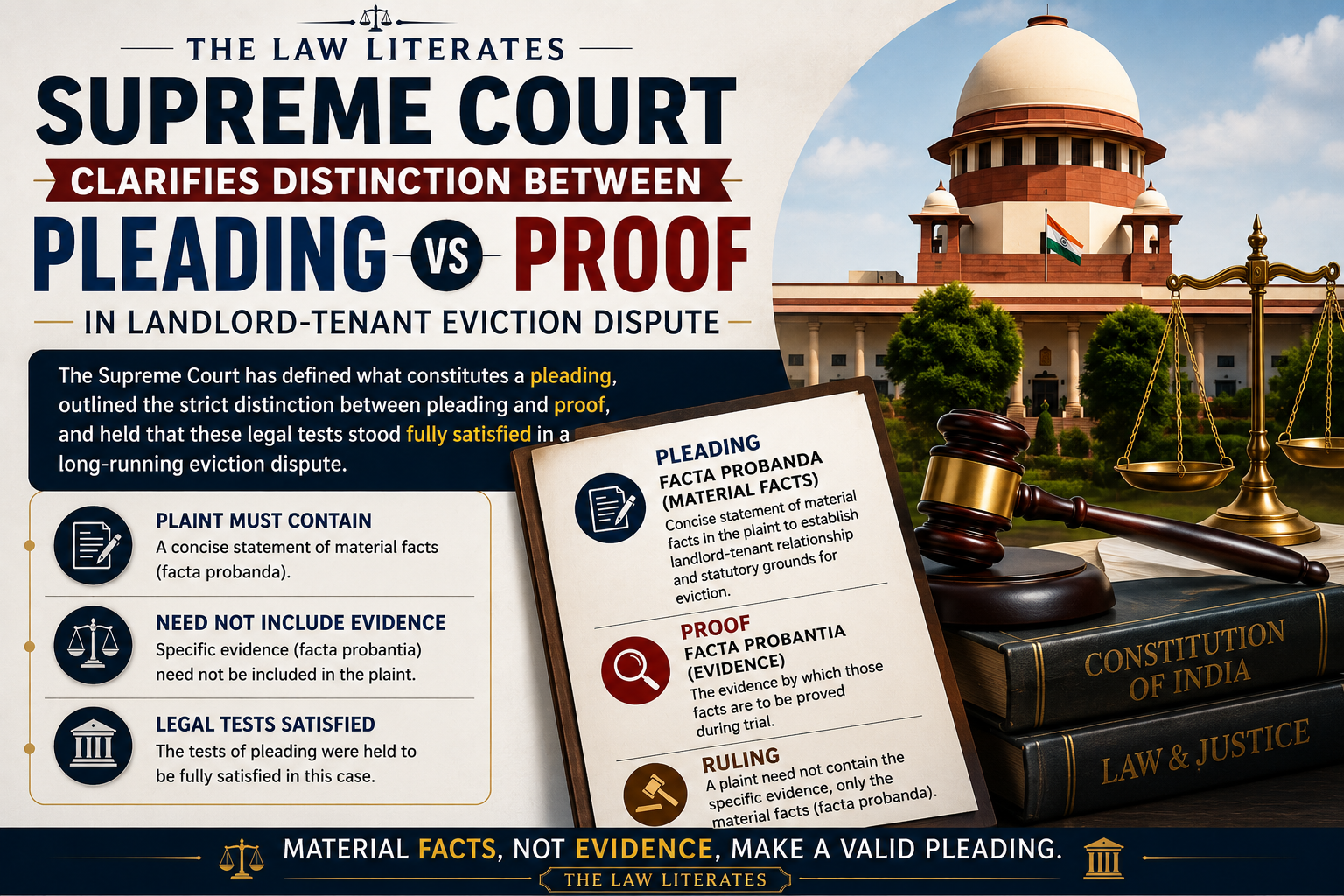
Supreme Court in a significant judgment, has defined what constitutes a pleading, outlined the strict distinction between pleading and proof, and determined that these legal tests stood fully satisfied in a long-running eviction dispute. It clarified that while a plaint must contain a concise statement of the material facts (facta probanda) establishing the landlord-tenant relationship and the statutory grounds for eviction, it need not include the specific evidence (facta probantia) by which those facts are to be proved
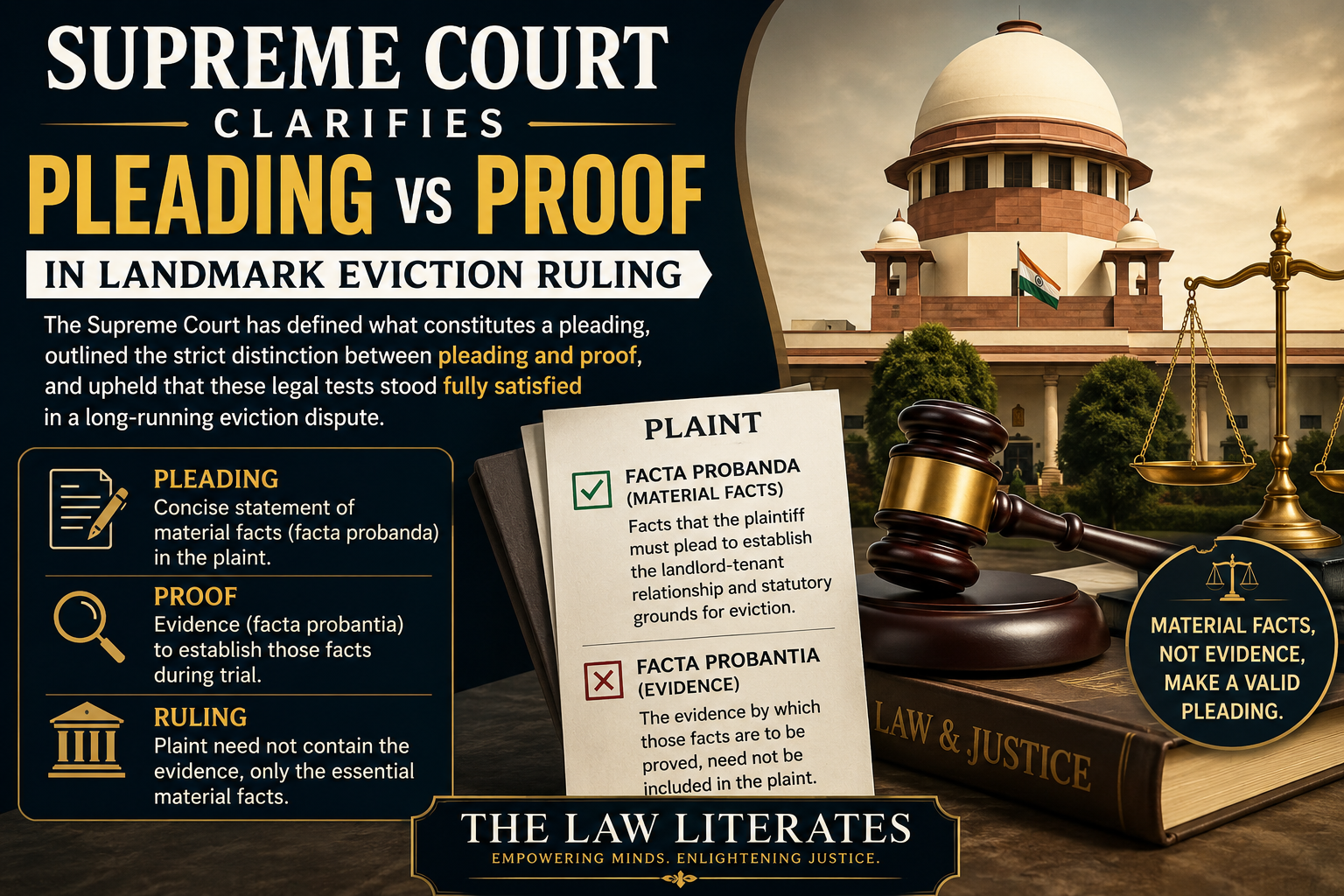
The Supreme Court reiterated the settled principle that pleadings are required to contain only the material facts constituting the cause of action and not the evidence by which such facts are to be proved. Drawing a clear distinction between facta probanda (material facts required to be pleaded) and facta probantia (evidence necessary to establish those facts), the Court observed that a plaint in an eviction matter is sufficient if it discloses the landlord-tenant relationship and the statutory grounds for eviction in concise terms. The absence of detailed evidence in the plaint cannot render the pleading defective, as proof is a matter of trial and not of pleadings. The Court further held that the legal requirements of valid pleading stood fully satisfied in the present case.”
For read the judgement click here
All Right Reserved
THE LAW LITERATES