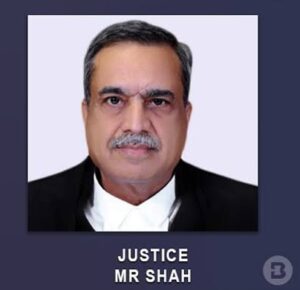
challenging their conviction for the offence punishable under Section 302 r/w 34 of the IPC,

Murder case – Presence of eye-witness – Allegedly deceased was attacked when he was returning from Court and was just 15 to 20 minutes away from the court – It was contended that presence of PW2 (eye-witness) was doubtful as he himself had stated that he came to the crime spot subsequent to the occurrence after receiving a message. Held, presence of PW2 was natural as he was required to attend the court. On being specifically questioned about his statement before the police that he reached the crime spot subsequently, PW2 denied the same and categorically stated that no such statement was given by him to the police and he did not know how such a statement was recorded in his statement. No question was asked by the defence to the person/IO who recorded the statement of PW2. Considering his deposition as a whole, it is clear that prosecution successfully proved his presence at the time and place of incident. (Para 10)*_
_*Rakesh and another v. State of U.P. CRL-A 556/21 06/07/21*_
_*[ SUPREME COURT ]*_
Adv Saba Hasan/ All rights reserved
click here to see the Judgment
SC upholds legality of demonetisation carried out by Notification u/s 26(2) of RBI Act without passing legislations.
FEMA, BANKING & INSURANCE: SC upholds legality of demonetisation carried out by Notification u/s 26(2) of RBI Act without passing legislations like on earlier 2 occasions.
• Denomination carried out by Notification, dated 8-11-2016, issued u/s 26(2) of RBI Act, is legal as the word “any” in the said section cannot be construed in a restrictive way as conferring powers to demonetise only one or some series of bank notes of a certain denomination and not as conferring powers to demonetise all bank notes of a particular denomination . The word confers sufficient powers to demonetise all series of bank notes of a denomination . The said section is not unconstitutional on grounds of excessive delegation.
• Further, the impugned Notification dated 8th November 2016 does not suffer from any flaws in the decision-making process. The impugned Notification dated 8th November 2016 satisfies the test of proportionality and, as such, cannot be struck down on the said ground. The period provided for exchange of notes vide the impugned Notification dated 8th November 2016 cannot be said to unreasonable.
PER SUPREME COURT (BY 4:1 MAJORITY)
(i) The power available to the Central Government under sub-section (2) of Section 26 of the RBI Act cannot be restricted to mean that it can be exercised only for ‘one’ or ‘some’ series of bank notes and not for ‘all’ series of bank notes. The power can be exercised for all series of bank notes. Merely because on two earlier occasions, the demonetization exercise was by plenary legislation, it cannot be held that such a power would not be available to the Central Government under sub-section (2) of Section 26 of the RBI Act;
(ii) Sub-section (2) of Section 26 of the RBI Act does not provide for excessive delegation inasmuch as there is an inbuilt safeguard that such a power has to be exercised on the recommendation of the Central Board. As such, sub-section (2) of Section 26 of the RBI Act is not liable to be struck down on the said ground;
(iii) The impugned Notification dated 8th November 2016 does not suffer from any flaws in the decision-making process;
(iv) The impugned Notification dated 8th November 2016 satisfies the test of proportionality and, as such, cannot be struck down on the said ground;
(v) The period provided for exchange of notes vide the impugned Notification dated 8th November 2016 cannot be said to unreasonable; and
(vi) The RBI does not possess independent power under sub-section (2) of Section 4 of the 2017 Act in isolation of the provisions of Sections 3 and 4(1) thereof to accept the demonetized notes beyond the period specified in notifications issued under sub-section (1) of Section 4 of the 2017 Act.
CLICK BELOW TO READ THE JUDGEMENT
**ADV MEGHA** ALL RIGHTS RESERVED
Best intentions and noble objects for the betterment of the Nation -Demonetization affirmed by Supreme Court of India

IN THE SUPREME COURT OF INDIA
WRIT PETITION (CIVIL) NO.906 OF 2016
VIVEK NARAYAN SHARMA …PETITIONER (S)
VERSUS
UNION OF INDIA …RESPONDENT (S)
On 8th November 2016, the notification of the Central Government, in exercise of the powers conferred by sub-section (2) of Section 26 of the RBI Act, notified that the bank notes 500 and 1000 shall cease to be legal tender with effect from 9th November 2016.
On 30th December 2016, the Specified Bank Notes (Cessation of Liabilities) Ordinance, 2016 was promulgated by the Hon’ble President of India. Subsequently, the Parliament enacted the Specified Bank Notes (Cessation of Liabilities) Act, 2017 which received the assent of the then Hon’ble President of India on 27th February
2017. The object and purpose of the Specified Bank Notes (Cessation of Liabilities) Ordinance, 2016 is to constitute a Reserve Bank of India to regulate the issue of bank notes and for keeping reserves with a view to secure monetary stability in India, and to generally operate the currency and credit system of the country to its advantage.
The Preamble of the Act states that it is essential to have a modern monetary policy framework to meet the challenge of an increasingly complex economy and the primary objective of the monetary policy is to maintain price stability while keeping in mind the objective of growth.
The monetary policy framework in India shall be operated by the Reserve Bank of India. The previous demonetisations were not carried out on the strength of subsection (2) of Section 26 of the Act inasmuch as both the legislations categorically stated that the demonetisation was “notwithstanding anything contained
in Section 26 of the Act”.
In fact, under the 1978 Act, one of the objects of the demonetisation of high denomination bank notes was that such notes facilitated illicit transfer of money for financial transactions which were harmful to the national economy or were used for illegal purposes and therefore, it was necessary in public interest to demonetise the high denomination bank notes. The use of the nonobstante clause clearly indicates that the Central Government was not demonetising the currency on the recommendation of the Central Board of the Bank under subsection (2) of Section 26 of the Act. In fact, this position is demonstrated by the fact that
in the year 1978, the then Central Government sought an opinion of the Central Board of the Bank regarding the demonetisation of high denomination bank notes. The proposal for demonetisation arose from or was initiated by the Central Government which sought the opinion of the Central Board of the Bank. Therefore, the proposal for demonetisation initiated by the Central Government was de hors subsection (2) of Section 26 of the Act.

The fact that the nonobstante clause found a place in Section 3 of the Ordinance of 1946 as well as in Section 3 of the 1978 Act, would clearly indicate that the Central Government, in those cases, did not demonetise the high denomination bank notes on the recommendation made by the Central Board of the Bank under subsection (2) of Section 26 of the Act but on the other hand, the same was carried out de hors the said provision y plenary legislations. Hence, the Central Government which
initiated the process chose the route through legislation for carrying out the demonetisation rather than by issuing an executive notification in the Gazette of India.
The above is in contrast with the issuance of the gazette notification dated 8th November, 2016, which was followed bythe Ordinance of 2016 and then the Act of 2017 was enacted. The said Act, inter alia, provides that the specified bank notes would cease to be the liability of the Reserve Bank of India or the Central Government.
The demonetisation carried out in the year 2016, of all series of bank notes of denomination Rs.500/ and Rs.1,000/ which forms the subject matter of the controversy at hand was, on the other hand, carried out by the Central Government by issuance of a notification in the Gazette of India on 8th November, 2016 demonetisation was an initiative of the Central Government, targeted to address disparate evils, plaguing the Nation’s economy, including, practices of hoarding “black” money, counterfeiting, which in turn enable even greater evils, including terror funding, drug trafficking, emergence of a parallel economy, money laundering including Havala transactions. It is beyond the pale of doubt that the said measure, which was aimed at eliminating these depraved practices, was well intentioned.
The measure is reflective of concern for the economic health and security of the country and demonstrates foresight. The measure was motivated by anything but the best intentions and noble objects for the betterment of the Nation. The measure has been regarded as unlawful only on a purely legalistic analysis of the relevant provisions of the Act and not on the objects of demonetisation. In the result, the writ petitions, special leave petitions and transfer petitions are directed to be posted before the appropriate Bench after seeking orders from Hon’ble the Chief Justice of India.
Parties to bear their respective costs.
(Adv Vaibhav Tomar )All Rights Reserved
CLICK BELOW READ THE JUDGEMENT
The bar of jurisdiction of Civil Courts u/s 430 of CA 2013 shall not apply where parties relegated out of Civil Courts without remedy/Delhi High Court

COMPANY LAW : The bar of jurisdiction of civil courts u/s 430 of CA 2013 shall not apply where parties relegated out of civil courts will be left sans adequate remedy or remediless.
HIGH COURT OF DELHI
Videocon Industries Ltd.
v.
Ram Raj Bhandari
CHANDRA DHARI SINGH, J.
RFA NO. 454 OF 2022
DECEMBER 23, 2022
The fundamental principle behind the bar on the jurisdiction of the civil court is that the there must adequacy of remedy being available to the parties who are relegated out of the civil Courts and they must not be rendered remediless. In case the company(TCL in the instant case) has been dissolved by the NCLT, there exists no corporate entity which can be proceeded under the Companies Act, 2013 and similarly, there exists no members of such a company. Therefore, appellants cannot approach NCLT and seek remedies under sections 39, 46, 58, 241 to 243 against a company which has been dissolved.
PER COURT
• There is an inherent right in every person as per Section 9 of the Code of Civil Procedure to bring a civil suit setting forth as to how the plaintiff’s legal rights have been violated for which he/she is seeking the indulgence of the Court and every interpretation must be made by which the jurisdiction of the civil Court is not readily ousted. Further, in case of suspicion, an interpretation should be made which leans in favour of the jurisdiction of the civil Court
• By way of Section 430 of the Act, 2013, a company has an existing remedy to approach the NCLT in terms of Section 241 read with Section 244 of the Act, 2013 and consequently, the Tribunal has been given wide powers to pass such orders as it may think fit in terms of Section 242 of the Act, 2013. Chapter XXVII deals with the constitution of the Tribunals. Powers have been given to the Tribunal to ‘pass such orders thereon as it thinks fit’ in terms of Section 420 of the Act, 2013. Moreover, under Section 424 of the Act, 2013 the Tribunal also has the same powers and functions as are vested with a Civil Court. Section 425 of the Act, 2013 has vested with the Tribunal the power to punish for contempt which was not available with the Company Law Board. In various ways, the NCLT is not merely exercising limited jurisdiction under the new Act, but is also vested with inherent powers and powers to punish for contempt. The NCLT is also empowered to determine as to whether rectification of the register is required to be carried out owing to such allotment, or cancellation of allotment ordered, if any. Section 39 of the Act, 2013 deals with the allotment of securities by a Company on the satisfaction of certain conditions and Section 46 inter alia pertains to issuance of duplicate shares on satisfaction of certain conditions as have been stated therein.
• The bulk of the dispute between the parties pertain to the ownership of the 50.21% shareholding in TCL and the validity of the meeting of the board of directors which is alleged to have taken place on 27th August 2013. Having perused the scheme of the Act, 2013, on the first sight though it appears that the disputes at hand between the parties can be adjudicated by the NCLT but such a decision would render the Appellants herein remediless as TCL has been dissolved and is no more in existence.
• The fundamental principle behind the bar on the jurisdiction of the civil court is that the there must adequacy of remedy being available to the parties who are relegated out of the civil Courts and they must not be rendered remediless. Among other relevant sections of the Companies Act, 2013 governing the dispute at hand, a glance at Section 241 read with Section 244 requires the following essentials to be satisfied before an application can be made to the Tribunal: a) In case the company does not have a share capital, an application under Section 241 can be made by not less than 1/5th of the total number of its members. b) In case the company does have a share capital, an application under Section 241 can be made by not less than 100 members or not less than 1/10th of the total number of its members, whichever is less; or any member(s) of the company holding not less than 1/10th of the issued share capital of the company.
• In case the company has been dissolved by the NCLT, there exists no corporate entity which can be proceeded under the Companies Act, 2013 and similarly, there exists no members of such a company. Therefore, such provisions cannot be said to be applicable to the disputed governing TCL.
• Therefore, there is no merit in the objection of the Respondents that the subsequent liquidation of TCL will have no bearing on the present case. No corporate entity now exists in the form of TCL which may be governed by the provisions of the Companies Act, 2013. Hence, it cannot be said that the suit filed by the plaintiff companies was barred under Section 430 of the Companies Act, 2013.
• In view of the reasons aforesaid, it is to be held that the trial court has erred in rejecting the plaint as being barred by Order VII Rule 11(d) of the Code inasmuch as the suit was not barred under Section 430 of the Act, 2013. The present appeal succeeds and the impugned order dated 21st March 2022, passed by the learned trial court is set aside. The suit is restored to the file. Considering the facts and circumstances of the case, there shall be no order as to costs.
CLICK BELOW TO READ THE JUDGEMENT
**ADV MEGHA** ALL RIGHTS RESERVED
Tea milk ‘OSAM Samridhi’ is classifiable under Heading No. 0401 20 00 & exempt under GST: AAR

GST : Tea milk ‘OSAM Samridhi’ containing milk (98.85 per cent with 2 per cent fat), stabilizers (0.10 per cent) and flavours (0.05 per cent) and packed and sold in one liter polypack for preparation of tea since neither added with any sugar or sweetener nor concentrated or consumed instantly, is classifiable under Tariff Item No. 0401 20 00 of Customs Tariff Act, 1975 and exempted from GST under Sl. No. 25 of Notification No. 2/2017-Central Tax (Rate), dated 28-6-2017.
AUTHORITY FOR ADVANCE RULINGS, JHARKHAND
HR Food Processing (P.) Ltd., In re
M V BADARI PRASAD AND PRADEEP KUMAR, MEMBER
ADVANCE RULING ORDER NO. JHR/AAR/2022-23/02
APRIL 27, 2022
Milk – Tea milk ‘OSAM Samridhi’ made up of fresh milk (98.85 per cent) after subjecting it to standardization to bring fat content to 2 per cent, heating followed by filtration, pasteurization, homogenization and mixing of permitted food stabilizers (0.10 per cent) and tea enhancing flavours like ginger (0.05 per cent) with no addition of sugar or sweetener and packed and sold to tea vendors in one liter polypack and used for preparation of tea – Said product having shelf life of only one day under prescribed storage condition and neither concentrated nor can be consumed instantly, classifiable under Tariff Item No. 0401 20 00 of Customs Tariff Act, 1975 as tea milk and not as beverage and same exempted from GST under Sl. No. 25 of Notification No. 2/2017-Central Tax (Rate), dated 28-6-2017 [Jharkhand Goods and Services Tax Act, 2017] [Paras 4 to 7.6, 11 to 13][In favour of assessee]
Circulars and Notifications: Notification No. 2/2017-C.T. (Rate), dated 28-6-2017.
CLICK BELOW TO READ THE RUILING
Tea milk ‘OSAM Samridhi’ is classifiable under Heading No. 0401 20 00 & exempt under GST AAR
GST Rate change for certain goods notified by Government as per 48th GST Council Meeting Recommendations
Exchange loss incurred on restatement of loan attributable towards working capital is allowable: ITAT

TRANSFER PRICING : Where assessee-company entered into international transactions with its AE for import of raw material (greasy wool) and benchmarked transactions by applying internal CUP method, since raw material purchased by assessee from external parties were of same product and average micron was 21.36 in comparison to 21.76 found in purchase from non AEs and weighted average purchase price from AE in comparison to weighted average purchase price from non-AE fell within tolerance range of +/- 5 per cent, TPO erred in rejecting CUP method and making adjustments by applying TNM method.
INCOME TAX : Exchange loss incurred by assessee upon restatement of loan in foreign currency which was attributable towards working capital was to be allowed.
INCOME TAX : Where assessee paid certain amount to different parties on account of repair and maintenance charges since assessee had produced all necessary material/evidences such as bills, vouchers and rate contract etc. in respect of repair and maintenance charges paid, impugned disallowance of said payments by Assessing officer was unjustified.
IN THE ITAT KOLKATA BENCH ‘C’
Deputy Commissioner of Income-tax.
v.
Global Wool Alliance (P.) Ltd.
SANJAY GARG, JUDICIAL MEMBER
AND RAJESH KUMAR, ACCOUNTANT MEMBER
IT APPEAL NO. 260 (KOL.) OF 2020
[ASSESSMENT YEAR 2005-06]
NOVEMBER 2, 2022
I. Section 92C of the Income-tax Act, 1961, read with rule 10B of the Income-tax Rules, 1962 – Transfer pricing – Computation of arm’s length price (Methods for determination of – CUP method) – Assessment year 2005-06 – Assessee-company was engaged in business of processing raw company wool, greasy wool etc. – It entered into international transactions with its AE for import of raw material and export of fabrics to AE – Both international transactions were benchmarked by applying internal CUP method as most appropriate method (MAM) – TPO rejected CUP method adopted by assessee and instead applied external TNM method and, accordingly, made transfer pricing adjustments – It was noted that assessee had reliable data available with regard to similar transactions with unrelated third parties and, thus, claimed CUP as MAM – Commissioner (Appeals) recorded a detailed finding of fact that raw material purchased by assessee from external parties were same product as purchased from AE and average micron was 21.36 in comparison to 21.76 found in purchases from non AEs – Further, weighted average purchase price from AE in comparison to weighted average purchase price from non-AE fell within tolerance range of +/- 5 percent – It was further found that similar CUP benchmarking done by assessee in earlier years under identical facts was accepted by TPO and there was no change in facts and in law during relevant year – Whether once revenue had accepted method or proposition in earlier years, then it was not open to revenue to take a different view in subsequent years – Held, yes – Whether thus transfer pricing adjustment made by TPO was to be deleted – Held, yes [Para7] [In favour of assessee]
II. Section 28(i) of the Income-tax Act, 1961 – Business loss/deductions – Allowable as (Exchange loss on foreign currency loan) – Assessment year 2005-06 – Assessee claimed exchange loss of certain amount resulting from restatement of loan in foreign currency which was attributable towards working capital – Assessing Officer disallowed said loss by following decision of his predecessor in earlier year – It was noted that earlier assessment order relied upon by Assessing Officer passed by his predecessor was reversed by Commissioner (Appeals) and loss pertaining to working capital was allowed – Whether, on facts, impugned loss incurred by assessee was to be allowed – Held, yes [Para11] [In favour of assessee]
III. Section 37(1) of the Income-tax Act, 1961 – Business expenditure – Allowability of (Repair and maintenance charges) – Assessment year 2005-06 – Assessee incurred expenses of certain amount on account of repair and maintenance charges paid to two parties – It also paid commission of certain amount by way of percentage of sales – Assessing Officer disallowed said payments and held that recipient parties were bogus non-existing parties – It was noted that in respect of both these parties all necessary material/evidences such as bills, vouchers and rate contract etc. in respect of repair and maintenance charges were placed before Assessing Officer as well as Commissioner (Appeals) and payments were made by cheques after proper deduction of TDS – Similarly, in respect of sales commission paid, sales invoices were placed on record in respect of which commission was paid after deduction of TDS – Whether, on facts, impugned payments made by assessee were to be allowed – Held, yes [Para15] [In favour of assessee]
CLICK BELOW TOP READ THE CIRCULAR
Exchange loss incurred on restatement of loan attributable towards working capital is allowable ITAT
**ADV MEGHA** ALL RIGHTS RESERVED
Surcharge on sales tax or turnover tax paid to State Govt. isn’t a fee or charge for purpose of sec. 40(a)(iib): SC

INCOME TAX : Surcharge on sales tax or turnover tax paid by assessee-company to State Government was not a ‘fee or charge’ coming within scope of section 40(a)(iib); review petition dismissed.
Assistant Commissioner of Income-tax
v.
Kerala State Beverages Manufacturing and Marketing Corporation Ltd.*
DINESH MAHESHWARI AND HRISHIKESH ROY, JJ.
CIVIL APPEAL NO. 14 OF 2022†
DIARY NO. 26265 OF 2022
NOVEMBER 16, 2022
CASE REVIEW
Review petition dismissed against Kerala State Beverages Manufacturing & Marketing Corpn. Ltd. v. Asstt. CIT [2022] (SC) (para 2).
2. We have carefully perused the review petition as also the grounds in support thereof. In our opinion, no case for review of order/judgment dated 3-1-2022 is made out.
3. The review petition is, accordingly, dismissed.
ITAT order not accepted by Dept. to be followed for succeeding AYs unless operation of order is stayed/suspended: SC
INCOME TAX : ITAT order not accepted by Dept. & pending appeal should be followed by Dept. for succeeding AYs unless operation of order is stayed/suspended.
• Where ITAT held that amount paid by assessee to its foreign parent was not taxable and was hence not liable to TDS u/s 195 and the order was in appeal before HC but was not stayed, there is no excuse for Department not to follow the ITAT order in deciding cases of subsequent assessment years unless the operation of ITAT’s impugned order has been stayed/suspended by HC/SC. In the result, HC was justified in quashing the order u/s 201. However, it is also directed that the matter be remitted to the Assessing Officer (TDS) at the stage of issuance of show cause notice under Section 201 so that after the decision of the High Court in the pending Appeal, the same can be proceeded further in accordance with law and on merits.
SUPREME COURT OF INDIA
Income Tax Officer (International Taxation) IT Ward 2(3)(2)
v.
GIA Laboratory (P.) Ltd.
M.R. SHAH AND MS. HIMA KOHLI, JJ.
SPECIAL LEAVE TO APPEAL (C) NO(S). 19873 OF 2022
DECEMBER 6, 2022
Balbir Singh, ASG Rupesh Kumar, Shashank Bajpai, Rupender Sinhmar, Shyam Gopal, Samarvir Singh, Ms. Monica Benjamin, Advs. and Raj Bahadur Yadav, AOR for the Petitioner. Jehangir D. Mistry, Sr. Adv. Niraj D. Sheth, Utkarsh Vats, Deepanshu, Advs. and Bhargava V. Desai, AOR for the Respondent.
ORDER
1. While issuing notice, this Court, on 31.10.2022, passed the following order:-
“Delay condoned.
Shri Balbir Singh, learned ASG has submitted that in the present case, notice under Section 201 of the Income Tax Act, 1961 was issued much prior to the ITAT decided against the Department, which was for the AY 2014-2015. It is submitted that the appeal against the final decision of the ITAT for AY 2014-2015 is pending before the High Court. It is submitted that even the judgment for AY 2010-2011 which is followed subsequently while deciding the dispute for AY 2014-2015 is also pending before this Court. It is submitted that even in a case the Department succeeds before the High Court in an appeal for AY 2014-2015, in that case also subsequently there may be dispute with respect to limitation. It is submitted that therefore, the proper course for the High Court would have been to club the writ petition(s) to be heard with the pending appeal against the final decision of the ITAT for AY 2014-2015 so that the dispute with respect to limitation may not arise subsequently.
Issue notice for the aforesaid purpose, making it returnable on 25-11-2022.
Dasti, in addition, is also permitted.
The respondent be served within a period of one week from today.”
2. Having heard Shri Rupesh Kumar, learned Counsel, appearing for the Revenue and Shri Jehangir D. Mistry, learned Senior Advocate, appearing on behalf of the assessee and in the facts and circumstances of the case and considering the fact that the liability of the recipient in the subject-matter of Appeal before the High Court and to avoid any further question, which may arise on limitation, we confirm the impugned judgment and order passed by the High Court quashing and setting aside the order under Section 201 of the Income Tax Act, however, we also direct that the matter be remitted to the Assessing Officer (TDS) at the stage of issuance of show cause notice under Section 201 so that after the decision of the High Court in the pending Appeal, the same can be proceeded further in accordance with law and on merits.
3. The Special Leave Petitions stand disposed of.
4. Pending applications also stand disposed of.
__________________________________________________________________________________________________________________
**ADV MEGHA** ALL RIGHTS RESERVED.