[ PUNJAB & HARYANA HIGH COURT] Section 378(4) CRPC NI ACT Sections 138 and 142 Dishonour of cheque Acquittal Grant of leave Case attempted to be built by the complainant, appears to be suffering from fatal infirmities so much so that it goes directly to the root of the case and shakes the very edifice on which the case of the complainant rests.

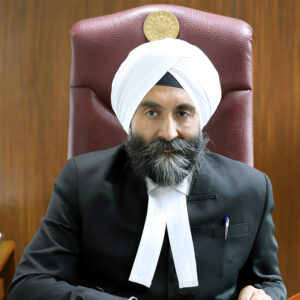
M.L.AGGARWAL HOSIERY PRIVATE LIMITED vs M/S SHIVANI ENTERPRISES CRM-A-1293-MA of 2017 [Harnaresh Singh Gill, J. ]
[ PUNJAB & HARYANA HIGH COURT ]
Section 378(4) CRPC NI ACT Sections 138 and 142 Dishonour of cheque Acquittal Grant of leave Case attempted to be built by the complainant, appears to be suffering from fatal infirmities so much so that it goes directly to the root of the case and shakes the very edifice on which the case of the complainant rests.
It is also relevant to mention here that the criminal conviction entails enigmatic and stigmatic exposures and experiences and thus it becomes of paramount importance to demand evidence of unimpeachable character and of unambiguous nature – Therefore, considering the above mentioned facts and legal positions, it would not be unjustified and completely misplaced to say that the complainant has miserably failed to prove if the impugned cheque has been issued against the discharge of any enforceable debt or liability.
Thus, in view of the totality of the circumstances and the settled position of law, the case attempted to be built by the complainant, appears to be suffering from fatal infirmities so much so that it goes directly to the root of the case and shakes the very edifice on which the case of the complainant rests. It is also relevant to mention here that the criminal conviction entails enigmatic and stigmatic
exposures and experiences and thus it becomes of paramount importance to demand evidence of unimpeachable character and of unambiguous nature.
Therefore, considering the above mentioned facts and legal positions, it would not be unjustified and completely misplaced to say that 4 of 5 the complainant has miserably failed to prove if the impugned cheque has been issued against the discharge of any enforceable debt or liability.
Preponderance of probabilities lies completely in favour of the accused. Further, the case of the complainant is required to rest on hisown leg and the same cannot be allowed to be bypassed in acasual and cosmetic manner.
Preponderance of probabilities lies completely in favour of the accused. Further, the case of the complainant is required to rest on his own leg and the same cannot be allowed to be bypassed in a casual and cosmetic manner – No merit in the present application, the same is dismissed
alka singh
For Judgment Click here
M_L_Aggarwal_Hosiery_Private_vs_M_S_Shivani_Enterprises_And_Anr_on_30_January_2020
Not To Call Proxy If Ready For arguments-2019-Delhi High Court

CLICK HERE FOR THE JUDGMENT PROXY COUNSEL
SHOULD BE TREATED AS A MAIN COUNSEL
Delhi High Court observers that the Further, it is noticed that in the District Courts, junior counsels, who appear from the chambers of the counsels who file vakalatnamas, are reflected as “Proxy Counsel”. From this, it is not clear as to whether the junior counsels, who appear, are ready to assist the Court or not. The term “Proxy Counsel” ought to be used only when the counsels, who appear, are not able to assist the Court in the matter or are merely seeking an
adjournment. Junior counsels, who work in the filing counsel‟s chamber,
and are aware of the facts and assist the court, ought not to be described as proxy counsels. In the practice of law, courts have a duty to encourage junior counsels who may not have filed vakalatnamas and ought to hear them if they are ready to assist the court.
They cannot be simply treated as proxy counsels, as such a treatment, is not only discouraging to such junior advocates but also creates delays in the dispensation of justice.
When junior counsels appearing before the court are prepared and are ready to assist, they ought to be heard and effective orders can be passed. Filing counsel or the counsel in whose favour the client has given the vakalatnama ought to encourage junior advocates and counsels to make submissions and argue matters. Of course, there is a word of caution. There are some orders such as withdrawal of a suit, recordal of settlement in a suit, etc., which essentially require the filing counsel to be present. Except in such situations, court proceedings can continue with the appearance of junior counsels so long as they have the necessary express/implied permission to make submissions from their seniors. When junior counsels working in the chambers of filing counsels appear and assist the court, instead of describing them as `proxy counsels‟ alternative terminology such as “___, Advocate appearing for Ld. Counsel for the Plaintiff/Defendant” can be adopted. Only in case a junior or other counsel who is completely unrelated and/or unprepared in the case, the terminology of „proxy counsel‟ can to be used. This would also enable junior counsels to ensure that they are not merely taking passovers and adjournments but also get prepared in the matters and are ready to make submissions.
ARRANGEMENT OF MENTIONING AND HEARING OF URGENT MATTERS DURING WINTER VACATION – 2022/DELHI HIGH COURT

CLICK HERE TO SEE THE NOTIFICATION OF DELHI HIGH COURT
ARRANGEMENT OF MENTIONING AND HEARING OF URGENT MATTERS DURING WINTER VACATION
1. It is hereby notified that Hon’ble the Chief Justice is pleased to nominate the following Hon’ble
Judges for hearing urgent matters, if any, during ensuing Winter Vacation 2022:
2. Hon’ble the· Chief Justice is further pleased to pass the following orders. for being followed during
the course of winter vacation:
I. The Hon’ble Judges will sit in Division Benches and also sIngly to- hear urgent Civil and
Criminal matters and such other matters as may be placed before them as per the schedule of
dates given above.
ii. Ordinarily the Hon’ble Judges will sit in Court on Monday, Wednesday and Friday and such
other days as they may think fit at 10.30 A.M. The sitting may continue for the next
succeeding day if matters fixed for any day are not finished on that day.
iii. If one of the Hon’ble Judges is not available on any day for any unforeseen reason, the other
Hon’ble Judge may sit alone subject to the condition that the Hon’ble Judge shall not dismiss
the Division Bench matters.
Delhi High Court: Police officials Cannot Transfer the FIR Citing Territorial Jurisdiction After Magistrate’s/Judge Order Under Section 156(3) Criminal Procedure Code

W.P.(CRL) 137/2021
JOLLY SINGH ….. Petitioner
Through: Mr. Ashwani Kumar, Mr. Kishan
Kumar, Mr. HR Dhamija, Advs.
versus
THE STATE ….. Respondent
CORAM:
HON’BLE MR. JUSTICE JASMEET SINGH
Delhi high court Quashing an order passed by an Additional Commissioner of Police whereby the investigation in an FIR alleging abduction was transferred to from Delhi’ Model Town police station to Uttar Pradesh’s Greater Noida,
1. This is a petition filed seeking cancellation of the order passed by the Addl. Commissioner of Police (Crime) dated 11.11.2020, whereby the investigation in the FIR No. 105/2019 was transferred to PS Surajpur, Greater Noida, U.P.
2. Brief facts of the present case are that the petitioner made a complaint to PS Model Town against the accused persons vide Complaint No. LC-1844 dated 05.12.2018. As per the complaint, it is stated that the accused persons abducted the petitioner and took him to Noida for finalizing an import deal where there was extortion and he was also robbed of Rs. 50,00,000. It is further stated that he was illegally detained at Surajpur and was also coerced to issue cheques worth Rs. 5.75 crores. When no action was taken on his complaint, the petitioner
moved an application under section 153 Cr.PC before the concerned
court at Rohini.
3. The Court of the learned Metropolitan Magistrate (MM), Delhi on 11.03.2019 passed an order stating “5. From the allegations and material available on record, clearly cognizable offence is made out and matter requires investigation. Accordingly, SHO concerned is directed to register an FIR in the present matter against the wrong doers in appropriate sections of law, without being influenced by the section mentioned in the complaint.” Pursuant to the said order, the FIR was registered at PS Model Town, Delhi.
4. The learned MM further directed the Addl. Commissioner of Police to ensure fair, proper and expeditious investigation. During the investigation, the Addl. Commissioner of Police had transferred the investigation to Police Station Surajpur, Noida, U.P. This transfer of
investigation from Delhi to Noida, U.P, has resulted into filing of the present petition.
5. It is stated by the learned counsel for the petitioner that the order of the Add. Commissioner of Police (Crime) in transferring the investigation to Noida (UP) is contrary to law. Additionally, it is stated that the Addl. Commissioner of Police (Crime) had no authority to transfer the
investigation out of its jurisdiction, i.e, Delhi, especially when the directions for registration of the FIR was issued by the learned MM, Delhi and more so when the Ld. MM is monitoring the investigation.
6. The learned counsel for the petitioner also states that the investigation of the present case was transferred from P.S. Model Town to Crime W.P.(CRL) 137/2021 Page 3 of 9 Branch, Prashant Vihar without any intimation to the Ld. MM as well as the petitioner and without affording any opportunity of being heard.
7. My attention has been drawn to the Status Report filed by the respondent which indicates that there were already two criminal cases and seven cases under Negotiable Instruments Act pending between the parties. The seven cases under NI Act are pending in Gautam Budh
Nagar, Noida and the other two FIRs which were also pending in Noida have already been cancelled. It further states that the alleged incident had taken place in PS Surajpur, Noida and that the investigation which was carried out did not establish any abduction of the petitioner from Delhi to Noida because the petitioner himself drove down to Noida. As a result, the case file was transferred vide order No. 517/ So/ Addl. CP/ Crime(HQ) dated 02.12.2020 of Addl. Commissioner of Police, Crime to the DGP, UP Police, Lucknow.
8. The learned counsel for the respondent has stated that because no cause of action or incident was related to any place in Delhi, therefore, the case was transferred to UP Police for further investigation where the jurisdiction lies.
the order of Addl. Commissioner of Police (Crime) dated 11.11.2020 is hereby quashed.
Judge has powers to grant permission to conduct prosecution independently u/s. 302 CrPC; but U/s. 301 CrPC, counsel engaged by informant or private party is required to act under directions of Public Prosecutor before Sessions Court/Supreme Court

Case: Dhariwal Industries Ltd Vs. Kishore Wadhwani.
Citation:
(2016) 10 SCC 378.
Ss. 301 and 302 CrPC – Distinction between explained, S. 301 CrPC applying to Sessions trials and S. 302 CrPC to Magisterial trials – Role of informant or private party is limited during prosecution of a case in Sessions Court – Under S. 301 CrPC, counsel engaged by informant or private party is required to act under the directions of Public Prosecutor – Regarding S. 302 CrPC, power is conferred on Magistrate to grant permission to complainant to conduct the prosecution independently – Proper mode of seeking permission under Section 302 CrPC, held, is only by written application. (Paras 7 to 20).
(1)Dhariwal_Industries_Ltd_vs_Kishore_Wadhwani_on_6_September_2016 (1)
CIVIL WRIT JURISDICTION/Passport Renewal Permission of the Court Where Criminal Case is Pending Not Required: BOMBAY HIGH COURT
BOMBAY HIGH COURT
Abbas_Hatimbhai_Kagalwala_vs_The_State_Of_Maharashtra_And_Anr_on_23_August_2022

Abbas Hatimbhai Kagalwala … Petitioner
V/s.
The State of Maharashtra and Anr. … Respondents
——————-
Mr. Vivek Kantawala a/w Amey Patil i/b M/s Vivek Kantawala & Co., for
the Petitioner.
Mr. D.P. Singh, for Respondent No.2.
Smt.Uma Palsuledesai, AGP for State.
———————
CORAM :S.V. GANGAPURWALA &
MADHAV J. JAMDAR, JJ.
DATED :23rd AUGUST 2022
MUMBAI: Observing that the permission of a court where a criminal case is pending is not required for renewal of a passport, the Bombay high court directed the regional passport office to process a man’s application without insisting on it.
2. Learned Counsel for the Petitioner submits that for renewal of the Passport, permission from the Court where a criminal case is pending against the Petitioner, is not necessary. If a criminal case is pending, then the only limitation would be, the Petitioner can not travel abroad without the permission from the Court where a criminal case.
It is the case of the Petitioner that validity of the Passport came to an end in the year 2017. The Petitioner applied for renewal and said application is pending for more than 4 years. It is also a fact that a criminal case is pending against the Petitioner u/s 420, 465, 467 r/w 120-B of the Indian Penal Code.
. Court observes that the fact that petitioner is already issued a Passport earlier and the Petitioner would be seeking renewal of the Passport and the said application is pending with the Respondent, so also, considering the Order passed by the Apex Court in Criminal Appeal No.1342/2017 (supra) court pass the following order.
i) The Respondent shall process the application of the petitioner for renewal of Passport without insisting for permission of the Court, where a criminal case is pending against the Petitioner. If the Petitioner is travelling abroad, then the Petitioner would be required to seek permission from the Court where criminal case is pending.
ii) Decision shall be taken as observed above, within 2 months.
iii) The impugned communication is quashed and set aside.
iv) If as per procedure on-line application is required to be made, the same shall be made by the
Petitioner
NI ACT Section 138 r/w Section 139 Criminal Trial Dishonour of Cheque Presumption Presumption qua issuance of chque for consideration

[ DELHI HIGH COURT ]Lekh_Raj_Sharma_vs_Yash_Pal_Gupta_on_30_June_2015
Lekh Raj Sharma vs Yash Pal Gupta CRL-LP 567/14 [ Vipin Sanghi JJ ]
NI ACT Section 138 r/w Section 139 Criminal Trial Dishonour of Cheque Presumption Presumption qua issuance of chque for consideration, based upon Pronote Failure of accused respondent to rebut the presumption Not only, there appeared contradiction in statements of respondent accused and DW-1 qua amount returned to complainant, but also testimony of DW-1 found to be unbelievable Accused respondent shield away from facing cross examination This factor discredits the defence If cheque purportedly handed over to complainant-appellant in blank, purpose was to enable appellant to encash it, in the event loan was not repaid Thus, there was an implied authority to complainant appellant to fill up cheque and encash it Once pronote has been signed and executed by respondent admittedly, it acts as an acknowledgement of transaction It is in dark as to why two pronotes had been executed in blank Rejecting all pleas, impugned order set-aside Ordered accordingly. [Paras 2 to 5, 15, 19 to 22, 26 & 27]
file:///C:/Users/admin/Documents/Downloads/Lekh_Raj_Sharma_vs_Yash_Pal_Gupta_on_30_June_2015.PDF
Latest law Hindu Marriage Act, Section 8 Information Technology Act Section 2 Marriage Validity Mere registration under section 8 of the Hindu Marriage
[ MADRAS HIGH COURT ]
Mr.S.Karunakaran vs Ms.Srileka AS 292/19 [ SATHISH KUMAR JJ ]
Hindu Marriage Act, Section 8 Information Technology Act Section 2 Marriage Validity Mere registration under section 8 of the Hindu Marriage Act will not give any sanctity in the eye of law Relationship of the plaintiff and the defendant during the college days and the fact that the plaintiff is in adolescent age who hass just attained majority and the defendant is in a dominant position to dominate her will and the solemnization of marriage not being proved Email correspondences between the plaintiff and the defendant By mere filing of email, it cannot be said that those emails have been proved as per law.
adv Vaibhav Tomar
file:///C:/Users/hp/Downloads/Mr_S_Karunakaran_vs_Ms_Srileka_on_21_March_2019%20(1).PDF